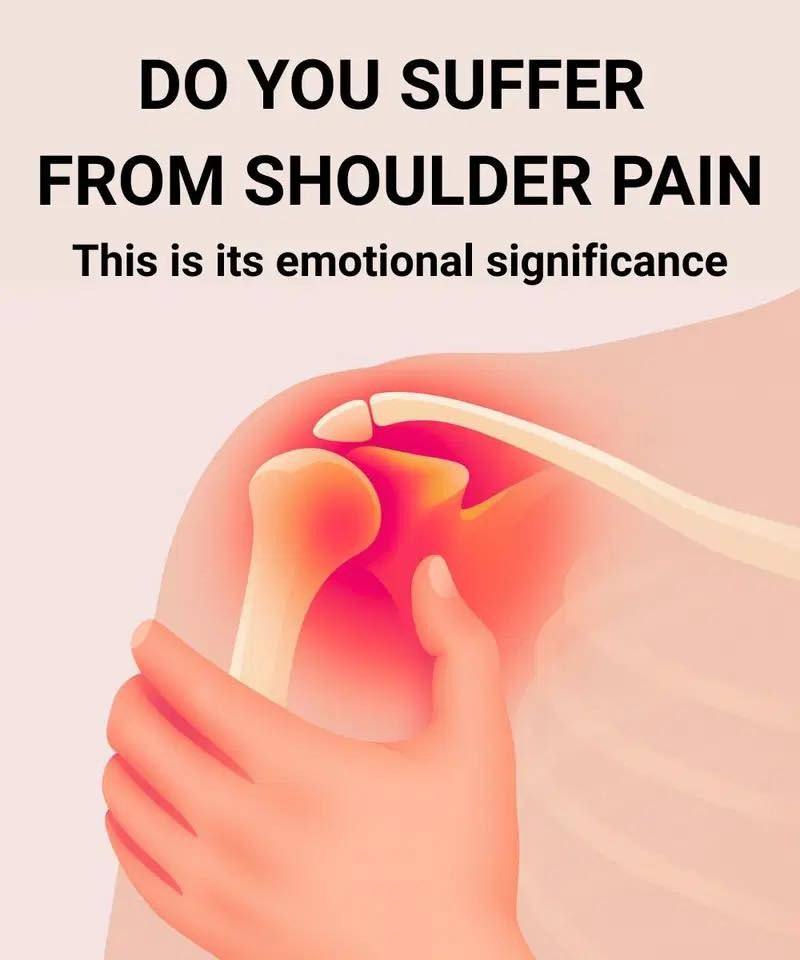
That “what it means emotionally” framing is another common social media hook, but it’s not medically reliable.
Shoulder pain is a physical symptom, and while stress can influence how we feel pain, there is no scientific basis for specific emotional “meanings” assigned to shoulder pain (like guilt, emotional burden, etc.).
🩺 What shoulder pain actually means medically
Shoulder pain is usually related to muscles, tendons, joints, or nerves, such as:
1. Muscle strain or overuse
- Poor posture
- Heavy lifting
- Repetitive movements
2. Rotator cuff problems
- Tendon inflammation or small tears
- Pain when lifting the arm
3. Frozen shoulder
- Stiffness and reduced movement over time
- Can develop after injury or inactivity
4. Arthritis
- Wear-and-tear in the joint (Osteoarthritis)
- Common with aging
5. Nerve irritation (neck-related)
- Pain can travel from the neck to the shoulder
- Tingling or numbness may occur
6. Injury or trauma
- Falls, sports injuries, or accidents
🧠 Where emotions do play a role (but not symbolically)
Stress or anxiety can:
- Increase muscle tension in the neck and shoulders
- Make pain feel worse
- Delay recovery in some cases
But this does not mean shoulder pain represents specific emotions.
🚨 When to take it seriously
Seek medical advice if:
- Pain lasts more than a few weeks
- You can’t move your arm properly
- There is weakness, numbness, or swelling
- Pain started after an injury
🧾 Bottom line
Shoulder pain is almost always physical or mechanical in origin, not a hidden emotional message. Social media “meaning-based” explanations are oversimplified and not evidence-based.
If you want, tell me your symptoms (which shoulder, when it hurts, movement limits), and I can help narrow down the most likely cause.
