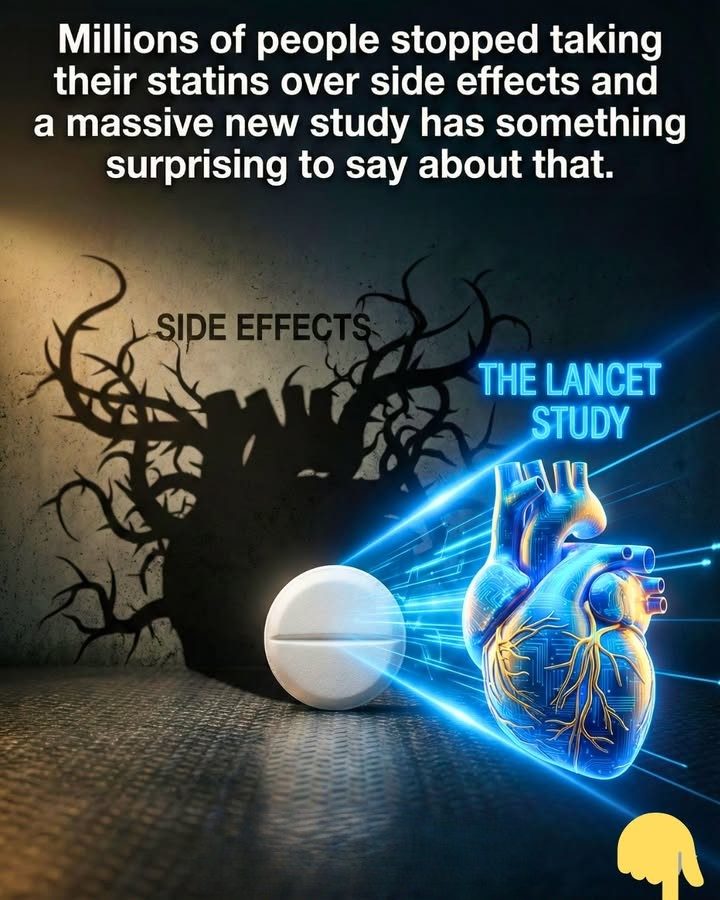
That post is referring to a real line of research—but it’s being simplified into a dramatic hook. The key idea is about something called the “nocebo effect.”
🧠 What the “landmark study” actually found
Large studies (including trials involving tens of thousands of patients) showed:
- Many people who reported statin side effects (like muscle pain)
- Experienced similar symptoms even when taking a placebo
This suggests expectations and awareness of side effects can sometimes trigger or amplify symptoms, a phenomenon known as the
👉 Nocebo effect
💊 What statins are for
Drugs like Atorvastatin are used to:
- Lower LDL (“bad”) cholesterol
- Reduce risk of heart attack and stroke
They are among the most studied medications in medicine.
⚠️ Does this mean side effects aren’t real?
No—that’s where viral posts mislead.
- Some people do experience genuine side effects, especially muscle-related issues
- But studies suggest a large portion of reported symptoms may not be directly caused by the drug itself
So both things are true:
- Side effects can happen
- But they may be over-attributed in many cases
📊 Why this matters
Stopping statins unnecessarily can increase risk of:
- Heart attack
- Stroke
Research has shown that many patients who stop due to side effects can often:
- Restart successfully
- Or tolerate a different statin or dose
🧾 What doctors usually recommend
If someone has symptoms:
- Don’t stop suddenly on your own
- Try:
- Lower dose
- Switching statins
- Alternate-day dosing
🧠 Bottom line
The “150,000 patient study” isn’t saying statins are harmless or that side effects are fake.
It’s showing that expectation plays a surprisingly big role in how people تجربه symptoms.
The takeaway is more balanced:
- Take symptoms seriously—but verify the cause before quitting a medication that protects your heart.
If you want, tell me which statin or symptoms you’re concerned about—I can help you sort out what’s typical and what’s worth checking.
