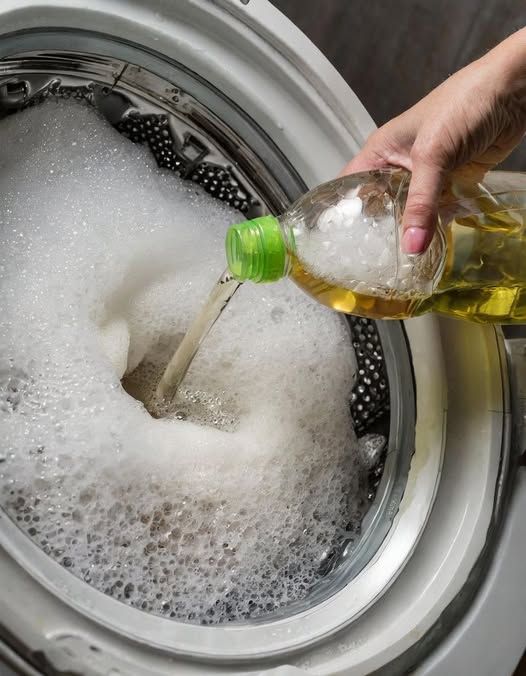
This is another half-true laundry tip that gets exaggerated online.
Yes—white vinegar can help with odors, residue, and softness, but it’s not a magic “whitening bleach,” and using it the wrong way can actually reduce its benefits or damage fabrics over time.
Here’s the correct, safe way to use it 👇
🧺 What vinegar actually does in laundry
White vinegar (acetic acid) can:
- Break down detergent buildup in towels
- Help reduce musty smells
- Soften fabrics by removing mineral residue from hard water
- Slightly brighten whites by cleaning buildup (not bleaching)
But it does not truly whiten like bleach.
✅ The right way to use vinegar
🧴 1. In the rinse cycle (best method)
- Add ½ to 1 cup of white vinegar
- Pour it into the fabric softener compartment or during rinse cycle
- This helps remove detergent residue and soften fabrics
🧼 2. For smelly or stiff towels
- Wash normally with detergent first
- Run a second cycle with vinegar in the rinse
👉 This is especially effective for “gym towel smell”
👕 3. For soaking (occasional use)
- Mix: 1 part vinegar + 4 parts warm water
- Soak for 30–60 minutes
- Then wash normally
⚠️ Common mistakes people make
❌ Mixing vinegar with bleach
- Creates toxic chlorine gas
- Never combine them
❌ Using too much vinegar
- Can weaken rubber seals in washing machines over time
- Can damage elastic in some fabrics if overused
❌ Expecting “whitening” like bleach
- Vinegar removes buildup, not stains or discoloration
🧠 Important truth
- Vinegar is a cleaning aid, not a detergent replacement
- It works best on odor + residue problems, not heavy stains
For stains, you still need proper stain removers or detergent boosters.
🧺 Bottom line
Using vinegar correctly (in the rinse cycle, in moderation) can make towels softer and fresher, but it won’t dramatically “whiten” laundry the way viral posts claim.
If you want, I can give you a simple laundry routine for whiter whites + soft towels without damaging your machine.
