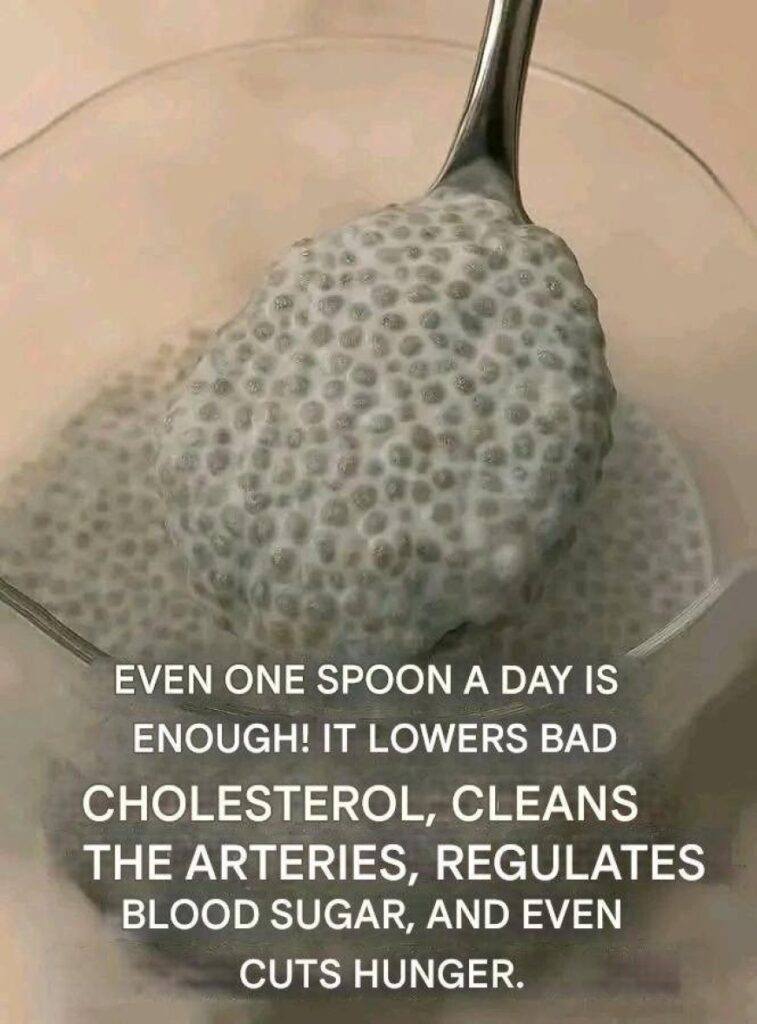
That kind of claim is classic health clickbait: it strings together multiple “miracle effects” for a single spoonful of something without naming a specific, evidence-backed treatment or considering real physiology.
Nothing you eat in a spoonful can simultaneously “clean arteries,” “regulate blood sugar,” and “lower bad cholesterol” in a direct, dramatic way. Those are complex processes controlled by long-term diet, genetics, lifestyle, and sometimes medication.
🧠 Let’s break down the claims
❤️ “Lowers bad cholesterol”
Some foods can modestly help LDL (“bad cholesterol”)—for example:
- Soluble fiber (oats, psyllium)
- Nuts and seeds
- Olive oil
But:
- Effects are gradual and modest
- Not immediate or dramatic from “one spoonful”
🫀 “Cleans arteries”
This is misleading.
- Arteries are not “washed clean” by food
- Plaque buildup (atherosclerosis) is a long-term biological process
- Managed by diet, exercise, and sometimes medication
🍬 “Regulates blood sugar”
Blood sugar control depends mainly on:
- Overall diet pattern
- Insulin function
- Physical activity
- Medical conditions like Type 2 diabetes
No single spoonful can “regulate” it on its own.
🍽️ “Suppresses hunger”
Some foods can increase fullness temporarily (fiber, protein, healthy fats), but:
- Hunger is controlled by hormones and brain signals
- Effects vary widely between people
- No universal “appetite switch” exists
🚫 Why these claims spread
- They simplify complex biology into “one trick” solutions
- They mix partially true facts with exaggerated promises
- They often hide the actual ingredient until engagement is high
🧠 Bottom line
There is no single spoonful of any food that cleans arteries, fixes cholesterol, regulates blood sugar, and suppresses hunger all at once. Real health benefits come from consistent diet and lifestyle habits, not quick fixes.
If you want, I can tell you:
👉 What actually lowers cholesterol in a scientifically proven way
👉 Or the most effective daily eating pattern for heart and blood sugar health (simple and realistic)
