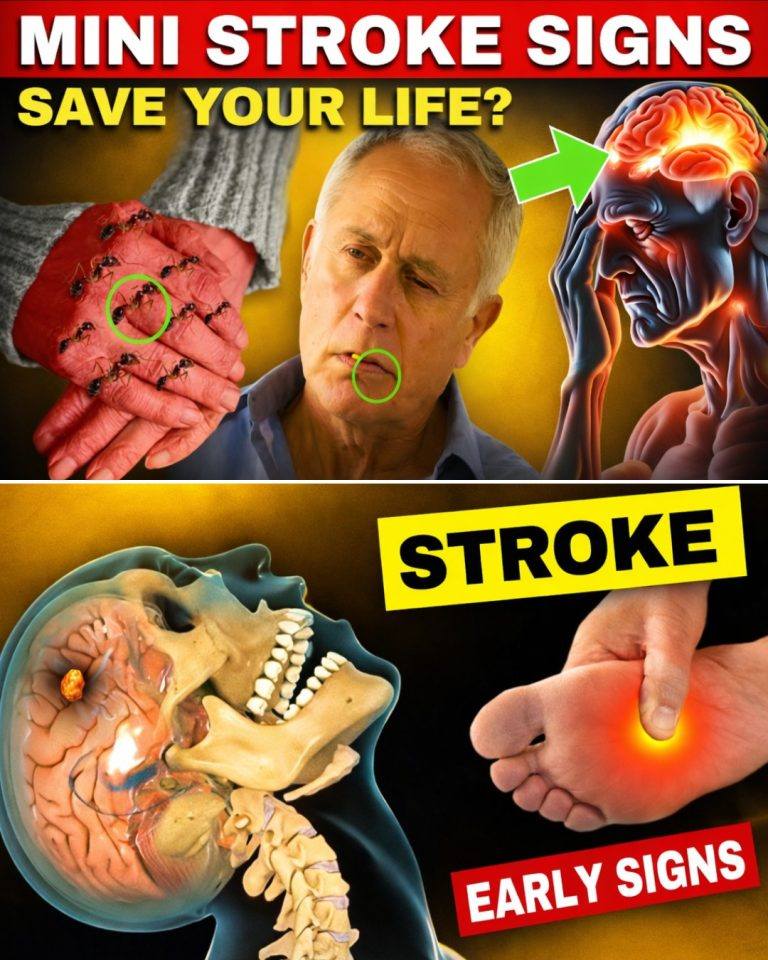
That headline isn’t completely wrong—but it’s a bit sensational. Most strokes don’t come with clear “one month early” warnings. What can happen are subtle or intermittent symptoms—especially mini-strokes—plus longer-term risk signals your body gives you.
Let’s break it down clearly and usefully.
⚠️ 8 Possible Early Warning Signs
These can appear days or weeks before a stroke—often briefly and then disappear. They may indicate a Transient ischemic attack (TIA), which is a major red flag.
1. Sudden numbness or weakness
Especially on one side of the body (face, arm, or leg)
2. Trouble speaking or understanding
Slurred speech or confusion
3. Vision problems
Blurred, double vision, or loss of vision in one eye
4. Sudden severe headache
Especially if it feels unusual or intense
5. Dizziness or loss of balance
Trouble walking or coordination issues
6. Facial drooping
One side of the face may sag slightly
7. Brief fainting or extreme fatigue
Less common, but can happen
8. Short-lived symptoms that go away
This is key—if symptoms disappear, people ignore them, but that’s often a TIA
🚨 When it’s urgent
Use the FAST rule:
- Face drooping
- Arm weakness
- Speech difficulty
- Time to call emergency services
Even if symptoms last just minutes, treat it as an emergency.
🛡️ 9 Practical Ways to Reduce Risk
These aren’t “guarantees,” but they significantly lower your chances.
1. Control blood pressure
High blood pressure is the #1 risk factor
2. Quit smoking
Smoking damages blood vessels and increases clot risk
3. Manage cholesterol
High LDL can lead to blocked arteries
4. Stay active
Even 30 minutes of walking most days helps
5. Eat a heart-healthy diet
Think fruits, vegetables, whole grains, and healthy fats
6. Maintain a healthy weight
Reduces strain on your heart and vessels
7. Limit alcohol
Too much increases stroke risk
8. Manage diabetes
Uncontrolled blood sugar damages blood vessels
9. Treat heart conditions
Especially **Atrial fibrillation, which raises clot risk
🧠 Bottom line
- A stroke (Stroke) often doesn’t give long, obvious warnings
- Short, temporary symptoms are the biggest clue
- Prevention is mostly about managing long-term health
If you want, I can turn this into a quick checklist you can save on your phone—or explain how to tell a stroke from something less serious like a migraine.
