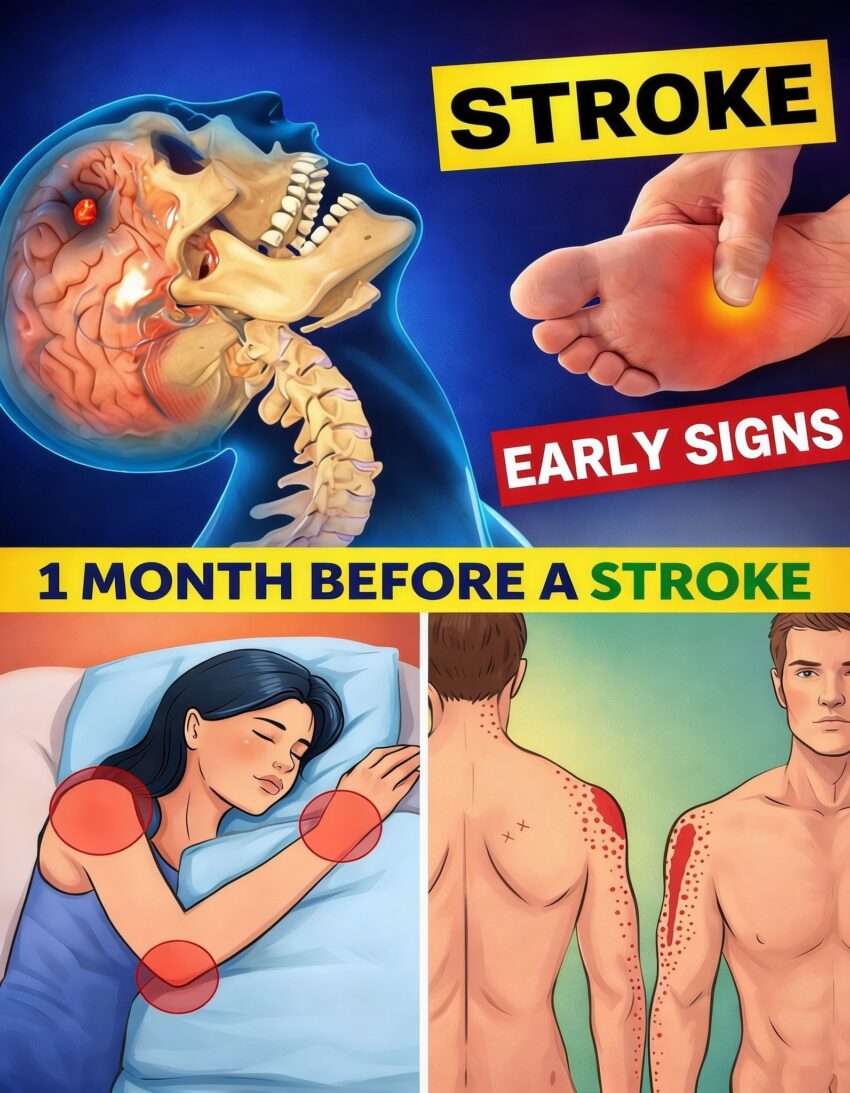
The idea that stroke gives “8 warning signs exactly one month before” is not medically reliable. Stroke usually happens suddenly, but in some people there are early warning events, especially something called a TIA (Transient Ischemic Attack)—a short blockage of blood flow to the brain that resolves within minutes to hours.
A TIA can happen days or weeks before a major stroke, and it is an important warning sign—but the timing is not fixed (not “exactly 1 month”).
🚨 Common Stroke Warning Signs (and possible TIA signs)
These can appear suddenly and may come and go:
- Sudden weakness or numbness in face, arm, or leg (especially one side)
- Trouble speaking or understanding speech
- Sudden vision problems (blurred or loss of vision in one eye)
- Severe, unusual headache (often described as “worst ever”)
- Dizziness or loss of balance
- Confusion or difficulty thinking clearly
- Drooping of one side of the face
- Trouble walking or coordination issues
👉 A simple test used worldwide is FAST:
- Face drooping
- Arm weakness
- Speech difficulty
- Time to call emergency help immediately
⚠️ Important reality check
- These symptoms are not guaranteed to appear a month before
- Some people have no warning at all
- If symptoms last minutes and disappear → could be a TIA, which is a medical emergency warning sign
🛡️ 9 Evidence-Based Ways to Reduce Stroke Risk
- Control blood pressure (most important risk factor)
- Manage diabetes properly
- Keep cholesterol in a healthy range
- Stop smoking
- Limit salt and processed foods
- Exercise regularly (even walking helps)
- Maintain healthy body weight
- Limit alcohol intake
- Treat heart conditions (like atrial fibrillation) if present
🧠 Bottom line
Be cautious with viral posts claiming exact “early warning timelines.” Stroke risk builds over time, but the actual event is usually sudden. The most important real warning is any sudden neurological change—that should be treated as an emergency immediately.
If you want, I can also explain how to tell the difference between a migraine, anxiety symptoms, and early stroke signs, because those are commonly confused.
