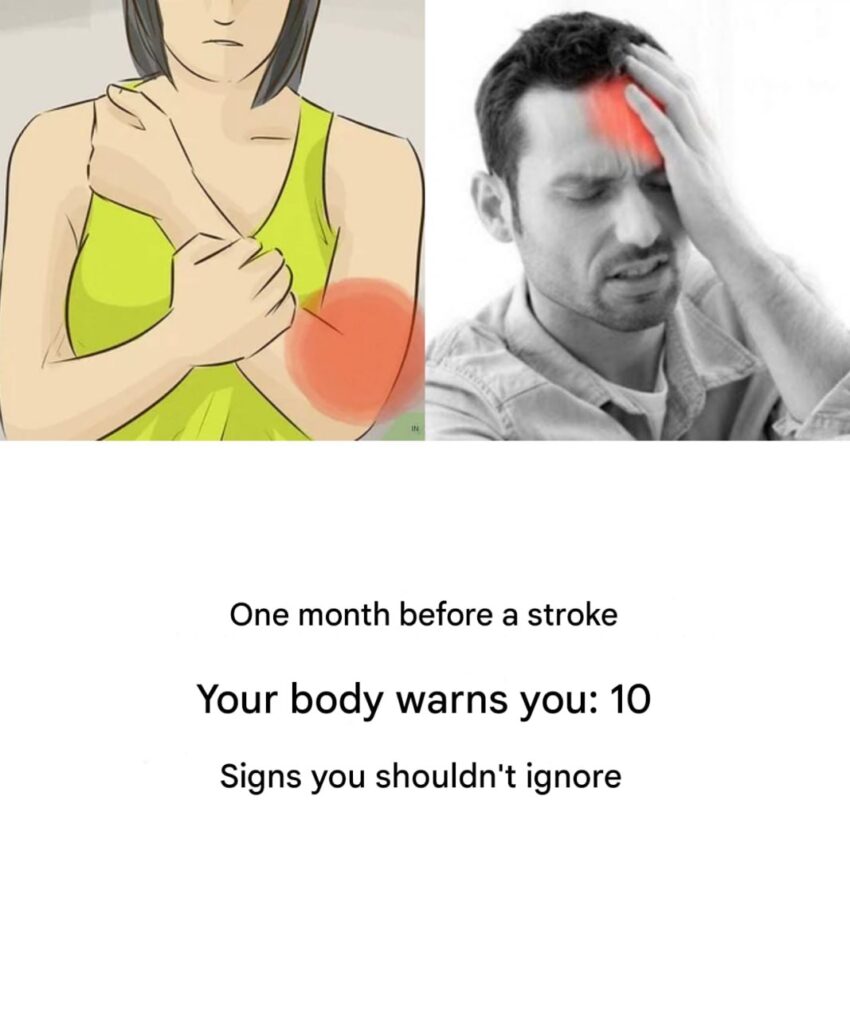
The idea that the body “warns you one month before a stroke” is a bit misleading. A stroke often happens suddenly, but in some cases the body can show warning signs days to weeks earlier, especially if there are mini-strokes called TIAs (transient ischemic attacks). These are important because they signal a higher risk of an upcoming stroke.
A key condition to understand is Stroke, which happens when blood flow to part of the brain is blocked or a blood vessel bursts. Early warning signs are usually brief and may come and go.
Here are 10 warning signs you shouldn’t ignore:
1. Sudden weakness or numbness (especially on one side)
Face, arm, or leg weakness on one side of the body is one of the most common red flags.
2. Temporary speech problems
Slurred speech, difficulty forming words, or trouble understanding others.
3. Sudden vision changes
Blurred vision, double vision, or loss of vision in one or both eyes.
4. Severe unexplained headache
A sudden, intense headache with no clear cause can be a warning sign, especially in hemorrhagic stroke.
5. Dizziness or loss of balance
Trouble walking, coordination issues, or feeling unsteady.
6. Confusion or difficulty thinking clearly
Sudden trouble concentrating, remembering, or understanding simple things.
7. Brief episodes of paralysis or numbness (TIA-like symptoms)
Symptoms that last minutes to hours and then disappear—these are major warning signals.
8. Sudden fatigue or weakness without reason
Extreme tiredness that feels unusual or sudden.
9. Tingling sensations
Pins-and-needles feelings, especially on one side of the body.
10. Trouble swallowing
Difficulty swallowing food or liquids that appears suddenly.
Important context
- These symptoms can also be caused by other conditions, not just stroke.
- If symptoms appear suddenly—even if they go away—medical attention is urgent.
- TIAs are especially serious because they can be a “warning stroke” before a major one.
When to act immediately
If someone has sudden face drooping, arm weakness, or speech difficulty (FAST signs), it’s an emergency—call local emergency services right away.
If you want, I can also explain how to reduce stroke risk or how to recognize TIA vs stroke differences clearly.
