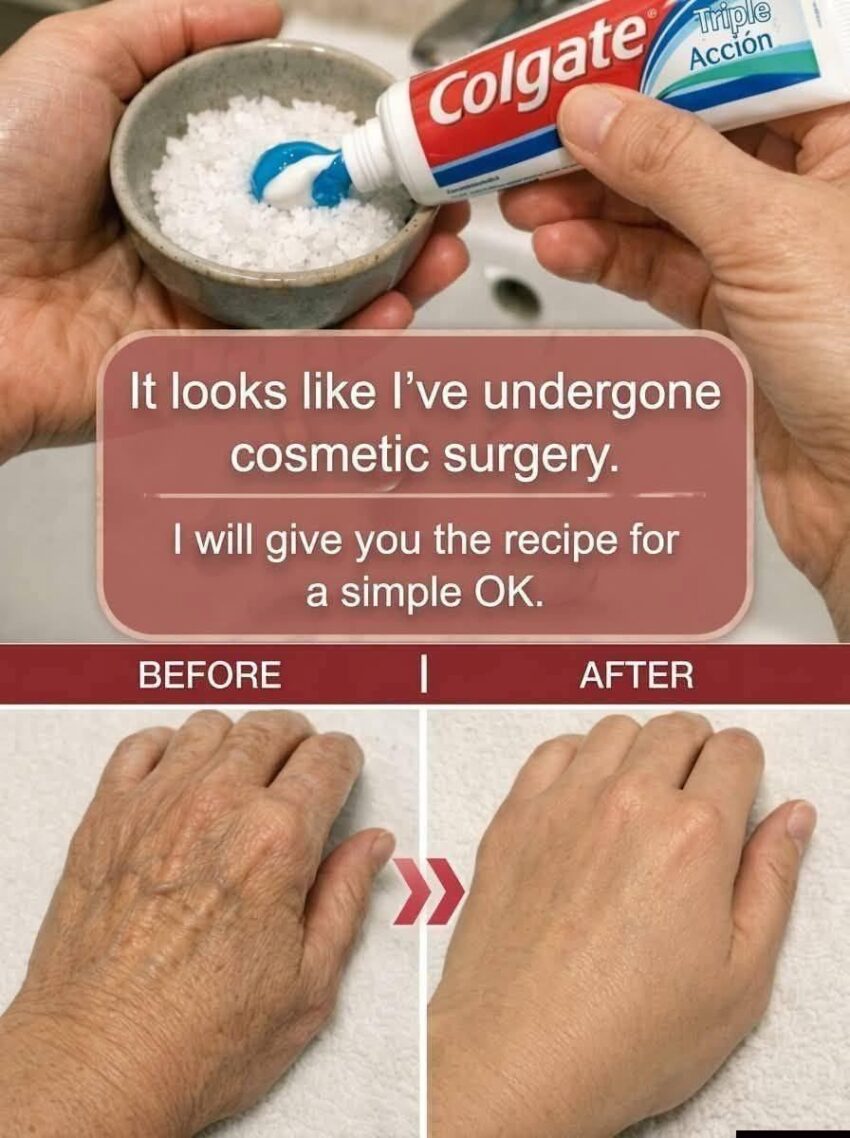
Using toothpaste for age spots or wrinkles is a popular internet “hack,” but it doesn’t actually improve skin aging—and it can easily make things worse.
Why toothpaste doesn’t help
Toothpaste is designed for teeth, not skin. Most formulas contain ingredients like baking soda, hydrogen peroxide, menthol, alcohols, and fluoride. These can:
- Dry out or irritate skin
- Disrupt the skin barrier
- Cause redness, peeling, or even chemical burns in sensitive areas
Any “temporary tightening” people notice is usually just skin dehydration, not real wrinkle reduction or fading of pigmentation.
About age spots and wrinkles
- Age spots (sun spots / solar lentigines) are caused by UV exposure and excess melanin buildup.
- Wrinkles form from collagen loss, sun damage, and natural aging.
Neither condition can be reversed with abrasive or drying substances like toothpaste.
What actually helps (safer, evidence-based options)
If your goal is to improve appearance naturally or gently, these are far more effective:
1. Sunscreen (most important)
Daily SPF 30+ prevents new age spots and slows wrinkle formation dramatically.
2. Vitamin C (brightening)
A topical vitamin C serum can help fade pigmentation and improve skin radiance over time.
3. Retinoids (collagen support)
Retinol or prescription retinoids:
- Increase collagen production
- Smooth fine lines
- Gradually lighten dark spots
4. Niacinamide
Helps reduce uneven pigmentation and improves skin texture with minimal irritation.
5. Gentle natural options (mild effects)
These won’t erase wrinkles but can support skin health:
- Aloe vera (soothing, hydrating)
- Green tea extract (antioxidant)
- Rosehip oil (supports skin regeneration)
Bottom line
Toothpaste is not a safe or effective treatment for age spots or wrinkles. It may give a short-lived “tight” feeling, but that comes from irritation—not real improvement.
If you want, tell me your skin type (oily, dry, sensitive, etc.), and I can suggest a simple routine that actually targets dark spots and fine lines without harsh products.
