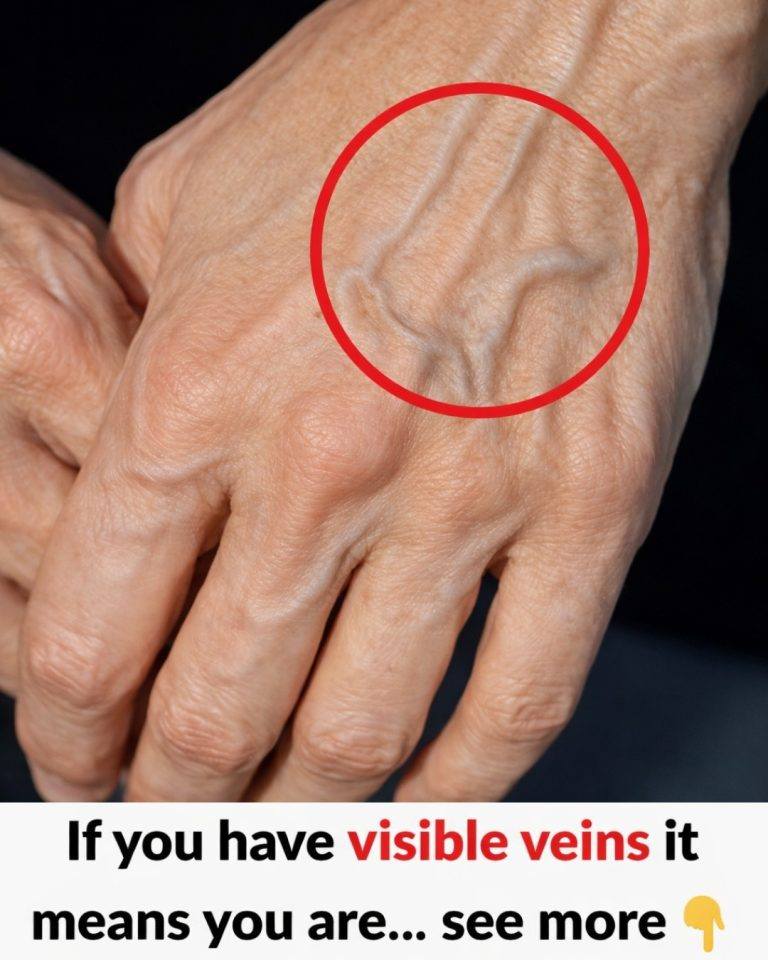
Visible veins on the arms or legs are usually normal and harmless, but in some cases they can hint at circulation or vein problems depending on how they look and what symptoms come with them.
Here’s what it might really mean:
1. Low body fat (most common reason)
If you’re lean or have lost weight:
- Less fat under the skin makes veins more visible
- Common in athletes and fit individuals
- Usually more noticeable after exercise or in warm weather
👉 This is generally a healthy sign, not a problem.
2. Exercise or muscle pump
After physical activity:
- Muscles push veins closer to the skin
- Blood flow increases (“pump” effect)
This makes veins temporarily stand out more.
3. Aging and skin thinning
As skin becomes thinner with age:
- Veins naturally appear more prominent
- Skin loses collagen and elasticity
This is a normal aging change.
4. Heat or hot weather
When your body is warm:
- Veins expand to help cool the body
- They become more visible, especially in arms and legs
5. Genetics
Some people are simply born with:
- Naturally visible veins
- Thin or translucent skin
No disease is involved.
6. Varicose veins (when it may be a medical issue)
If veins are:
- Bulging, twisted, or rope-like
- Mainly in the legs
- Accompanied by heaviness, pain, or swelling
This could be Varicose Veins.
Other possible symptoms:
- Aching legs after standing
- Itching around veins
- Skin discoloration near ankles
7. Dehydration (temporary effect)
When dehydrated:
- Blood volume decreases slightly
- Veins may look more prominent
Usually improves with fluids.
When to worry
Visible veins are usually fine—but see a doctor if you notice:
- Pain, swelling, or warmth in the leg
- Sudden new bulging veins
- Skin ulcers or color changes
- One leg much worse than the other
Bottom line
Visible veins are most often due to:
- Low body fat
- Exercise
- Genetics
- Heat or normal aging
Only when veins become bulging, painful, or twisted does it suggest a condition like varicose veins.
If you want, I can also explain how to reduce prominent veins cosmetically or how to tell normal veins from dangerous circulation problems like clots.
