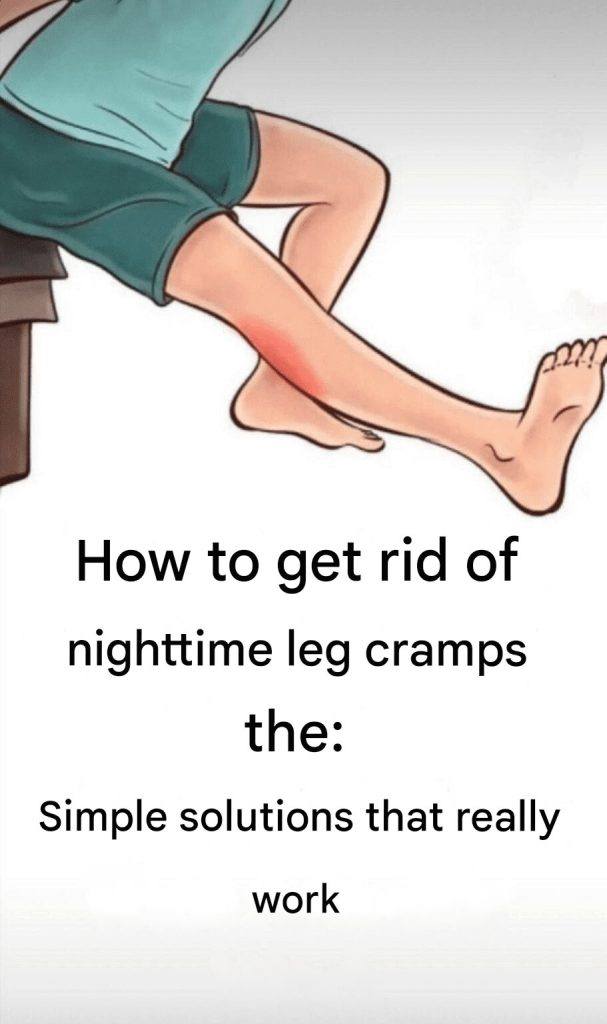
Nighttime leg cramps are sudden, painful muscle contractions—often in the calf or foot—that can wake you up and last seconds to minutes. They’re common, especially in older adults, and usually not dangerous, but they can be very disruptive.
Here are simple, evidence-based ways to reduce and prevent them:
🟢 Quick relief when a cramp happens
1. Stretch the muscle immediately
For a calf cramp:
- Straighten your leg
- Pull your toes upward toward your shin
- Hold for 20–30 seconds
This helps “reset” the muscle contraction.
2. Stand and put weight on it
- Stand up carefully
- Walk slowly for a minute
This helps the muscle relax faster.
3. Massage the tight area
- Firm, gentle pressure improves blood flow and eases spasm
4. Apply heat
- Warm towel or heating pad relaxes the muscle
(Cold can help afterward if soreness remains)
🌙 Preventing nighttime cramps
5. Gentle calf stretching before bed
Daily stretching is one of the most effective long-term solutions:
- Wall calf stretch (hold 30 seconds each side)
- Repeat 2–3 times before sleep
6. Stay hydrated
Dehydration can increase muscle irritability:
- Drink enough water during the day
- Avoid going to bed severely dehydrated
7. Check electrolytes (important)
Low levels of:
- Magnesium
- Potassium
- Calcium
…can contribute in some people.
Foods that help:
- Bananas, spinach, yogurt, nuts, beans
8. Review medications (if applicable)
Some medicines can increase cramps, such as:
- Diuretics (“water pills”)
- Some asthma or cholesterol drugs
A doctor can adjust if needed.
9. Avoid long inactivity before bed
- Sitting still for hours can tighten muscles
- Light evening walking or stretching helps
10. Proper sleeping position
- Avoid pointing toes downward for long periods
- Keep feet in a neutral position if possible
🧠 When cramps may need medical attention
See a healthcare provider if:
- Cramps are frequent and severe
- You also have numbness, swelling, or weakness
- One leg is consistently worse than the other
- You have underlying conditions like diabetes or nerve issues
🟢 Key takeaway
Most nighttime leg cramps are related to muscle fatigue, dehydration, or nerve/muscle sensitivity, and they usually improve with:
- Stretching
- Hydration
- Electrolyte balance
- Simple habit changes
If you want, I can also explain why leg cramps get worse at night specifically or which supplements actually help (and which are mostly marketing).
