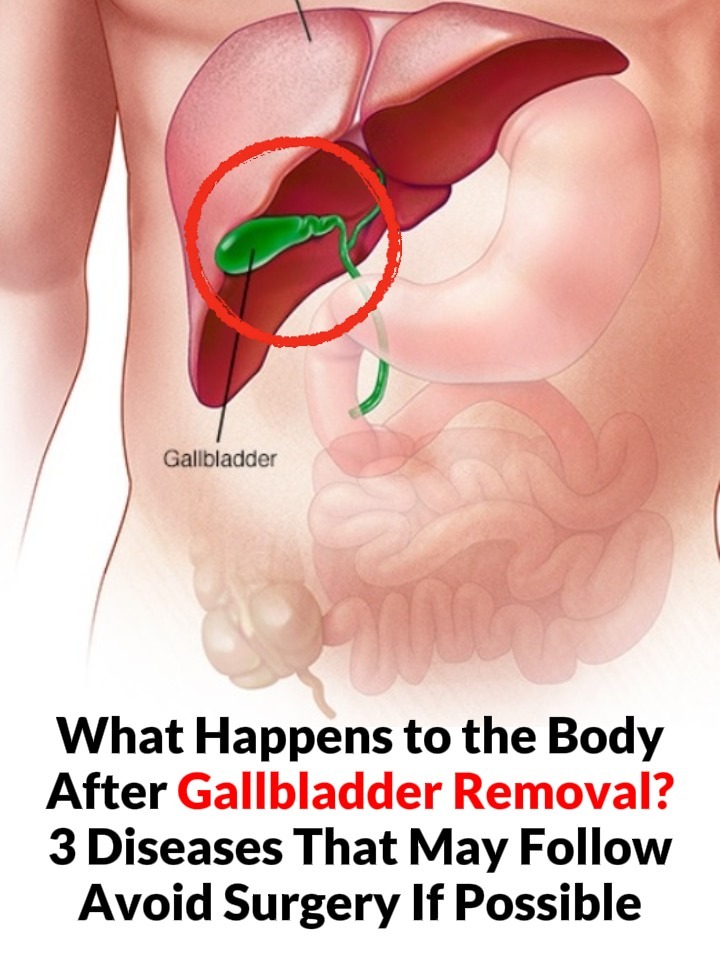
The idea that you should “avoid gallbladder surgery if possible” is misleading. In many cases, removal of the gallbladder is the definitive and safest treatment, not something to fear by default.
The procedure is called Cholecystectomy, and it’s usually done for painful gallstones, infection, or blockage.
That said, life does change after surgery—mostly in how bile is handled.
What changes in the body after gallbladder removal
The gallbladder normally stores and concentrates bile. After removal:
- Bile flows continuously from the liver into the intestine
- Fat digestion becomes less “timed” and controlled
- The digestive system gradually adapts over weeks to months
Most people adjust well and live completely normal lives.
3 conditions that may occur afterward
1. Bile acid diarrhea
Some people develop loose or urgent stools after eating.
This is part of Postcholecystectomy syndrome.
Why it happens:
Bile enters the intestine continuously and can irritate the colon.
Reality check:
Often mild and treatable with diet or medication—not permanent in most cases.
2. Indigestion or abdominal discomfort
Some people experience bloating, gas, or upper abdominal pain after surgery.
Also grouped under postcholecystectomy syndrome.
Why it happens:
- Changes in bile flow
- Pre-existing digestive issues that were masked by gallbladder disease
3. Increased sensitivity to fatty foods
Without a storage system for bile, large fatty meals can be harder to digest.
Result:
- Loose stools
- Bloating
- Nausea in some people
Fix: Usually improves with smaller, lower-fat meals.
Important reality: risks are often exaggerated
While online claims warn about major long-term diseases, large medical studies show:
- Most people have no serious long-term complications
- Symptoms, if present, are usually manageable
- Quality of life often improves after surgery because pain and infections stop
When surgery is actually necessary
Doctors recommend cholecystectomy when there is:
- Recurrent gallstone pain
- Gallbladder infection
- Blockage of bile ducts
- Risk of pancreatitis
Delaying surgery in these cases can be dangerous.
Bottom line
Gallbladder removal does change digestion, but it does not usually cause serious disease. The so-called “3 diseases” are typically mild, treatable digestive symptoms—not life-threatening conditions.
If you want, tell me your symptoms or diagnosis (like gallstones or pain episodes), and I can help you understand whether surgery is typically recommended in that situation or if conservative management is reasonable.
