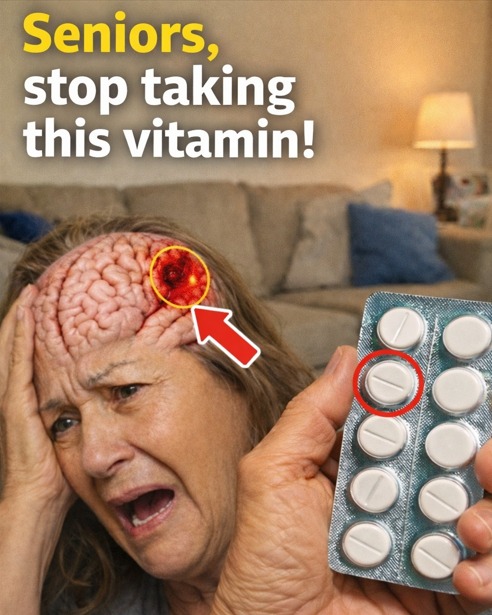
The headline you shared (“As a Brain Doctor, I’m Shocked…”) is the kind of viral health claim video/article format that circulates online, but it’s important to separate sensational framing from what medical research actually shows.
Here’s the evidence-based reality behind the idea that a “common vitamin may raise stroke risk in seniors”:
🧠 First: No single normal vitamin “causes strokes”
For healthy older adults, vitamins from food (or standard-dose supplements) are generally not linked to increased stroke risk.
What does matter is:
- Dose (normal vs high-dose supplements)
- Type (natural diet vs pills)
- Medical conditions & medications (especially blood thinners)
⚠️ Vitamins that are often misrepresented in stroke-risk claims
1. Vitamin E (most commonly mentioned)
- Some studies show high-dose vitamin E supplements may increase risk of bleeding (hemorrhagic stroke) in certain people.
- But:
- This is mainly with large supplemental doses, not food intake.
- Normal dietary vitamin E (nuts, seeds, oils) is considered safe.
📌 Evidence reviews show mixed or no benefit for stroke prevention and possible harm at high doses. (Women’s Brain Health Initiative)
2. Vitamin D
- Very high doses can cause calcium imbalance, which may affect blood vessels indirectly.
- However:
- Large clinical trials show no clear increase or decrease in stroke risk from vitamin D supplements overall. (PMC)
3. Vitamin A (high-dose supplements)
- Excess vitamin A can be toxic and affect the liver and bones.
- Some research links very high supplemental intake with worse cardiovascular outcomes, but this is not from normal dietary intake.
4. Vitamin B3 (Niacin)
- At prescription/high doses used for cholesterol:
- Can cause flushing, blood pressure changes, and metabolic stress
- Not commonly used today for stroke prevention due to side effects.
5. Vitamin B12 & folate (important nuance)
- Low B12 levels (deficiency) can actually increase stroke risk, especially in older adults.
- So here, the risk is the opposite: too little is harmful, not too much in normal ranges.
(PubMed)
🧠 The big takeaway doctors actually agree on
Across major reviews:
- Vitamins do NOT reliably prevent stroke
- Most “stroke risk” concerns come from:
- ❌ Very high-dose supplements
- ❌ Mixing supplements with blood thinners
- ❌ Underlying deficiencies (especially B12)
Healthy diet patterns (like Mediterranean-style eating) matter far more than individual vitamins. (Women’s Brain Health Initiative)
🚨 Why these headlines sound scary
These claims are usually based on:
- Small or outdated studies
- High-dose supplement scenarios
- Misinterpreted “risk increase” statistics
- YouTube-style medical dramatization
They are designed to sound urgent, not to reflect average real-world use.
🧾 Practical advice for older adults
If the goal is stroke prevention:
Do:
- Control blood pressure (most important factor)
- Eat a balanced diet (vegetables, fruits, whole grains, fish)
- Take vitamins only if deficient or prescribed
- Use standard doses if needed
Avoid:
- Mega-dose vitamin E, A, or “brain boosters”
- Random supplement stacks without medical advice
- Combining blood-thinning supplements with medications
If you want a simple rule:
Food-based vitamins are safe. High-dose supplement vitamins are where risk can appear.
If you want, I can break down which supplements are actually useful vs useless for brain health in seniors, based on real clinical evidence (not YouTube claims).
