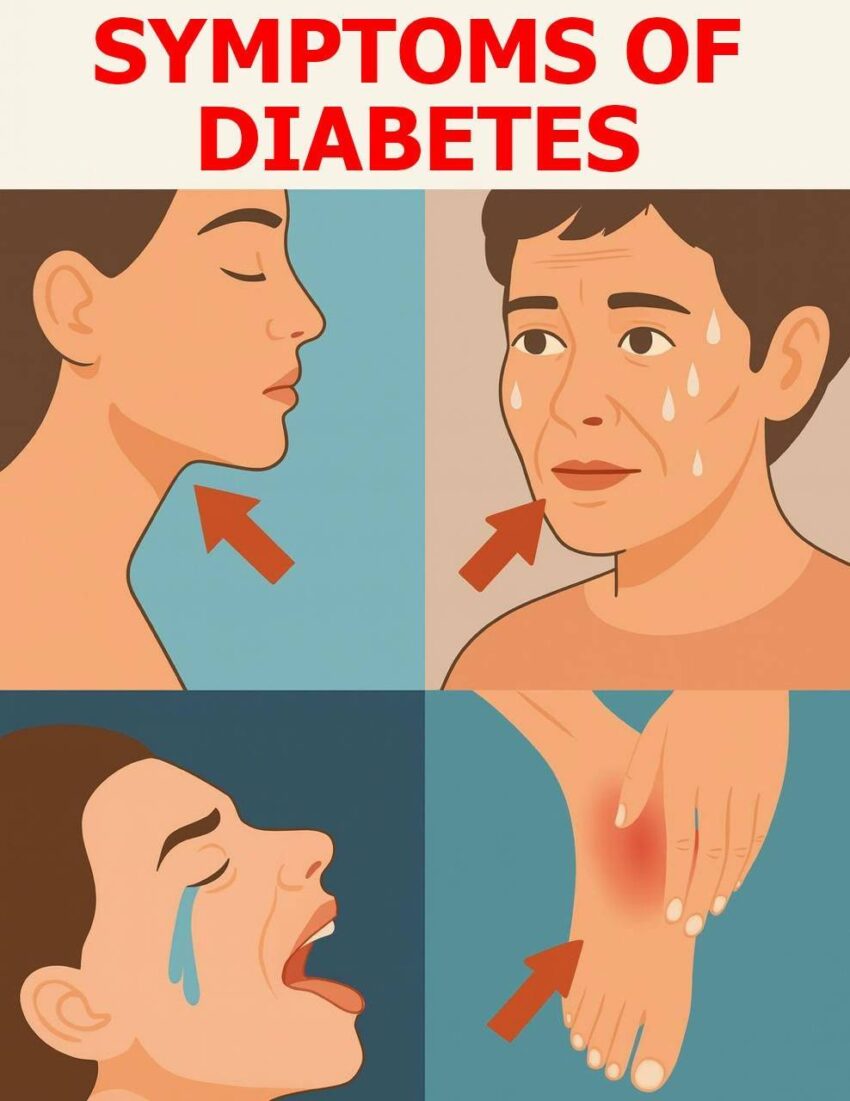
High blood sugar (hyperglycemia) is often an early warning sign of diabetes, especially type 2 diabetes. The problem is that it can develop slowly and quietly, so many people don’t notice it until complications begin.
Here’s a clear breakdown of the signs of high blood sugar and who is most at risk of developing diabetes.
🩸 Signs of High Blood Sugar
When blood glucose stays elevated, the body starts showing symptoms such as:
1) Frequent urination
Excess sugar pulls water into urine, causing you to urinate more often—especially at night.
2) Increased thirst
Because of fluid loss, you feel constantly thirsty even after drinking water.
3) Fatigue
Cells can’t use glucose properly, so the body feels low on energy.
4) Blurred vision
High sugar affects fluid balance in the eye lens, causing temporary vision changes.
5) Slow wound healing
Cuts and infections take longer to heal due to impaired circulation and immune response.
6) Increased hunger
Despite high blood sugar, cells are “starving” for energy, triggering more hunger.
7) Tingling or numbness (early nerve damage)
Long-term high sugar can start affecting nerves, especially in feet and hands.
⚠️ Who is Most at Risk of Diabetes?
Diabetes risk is influenced by lifestyle, genetics, and age. People most at risk include:
1) Overweight or obese individuals
Especially excess fat around the abdomen, which increases insulin resistance.
2) People with a family history
Having a parent or sibling with type 2 diabetes significantly increases risk.
3) Age over 45
Risk rises with age due to reduced insulin sensitivity.
4) Sedentary lifestyle
Lack of physical activity reduces the body’s ability to use glucose effectively.
5) High blood pressure or high cholesterol
These often occur together as part of metabolic syndrome.
6) Poor diet (high sugar/refined carbs)
Frequent intake of sugary drinks, white bread, and processed foods increases risk.
7) History of gestational diabetes
Women who had diabetes during pregnancy have higher long-term risk.
8) Sleep problems or chronic stress
Poor sleep and high stress hormones can worsen insulin resistance.
🧠 Important medical note
Diabetes develops gradually as part of a condition called Type 2 Diabetes, where the body becomes resistant to insulin or doesn’t produce enough of it.
Early detection is key because high blood sugar over time can damage:
- heart and blood vessels
- kidneys
- eyes
- nerves
🧪 When to get checked
A simple blood test is recommended if you have:
- persistent thirst or fatigue
- frequent urination
- risk factors listed above
- random blood sugar concerns
If you want, I can also explain:
- early warning signs before diabetes develops (prediabetes stage)
- foods that quickly raise or stabilize blood sugar
- or a simple daily plan to lower risk naturally
