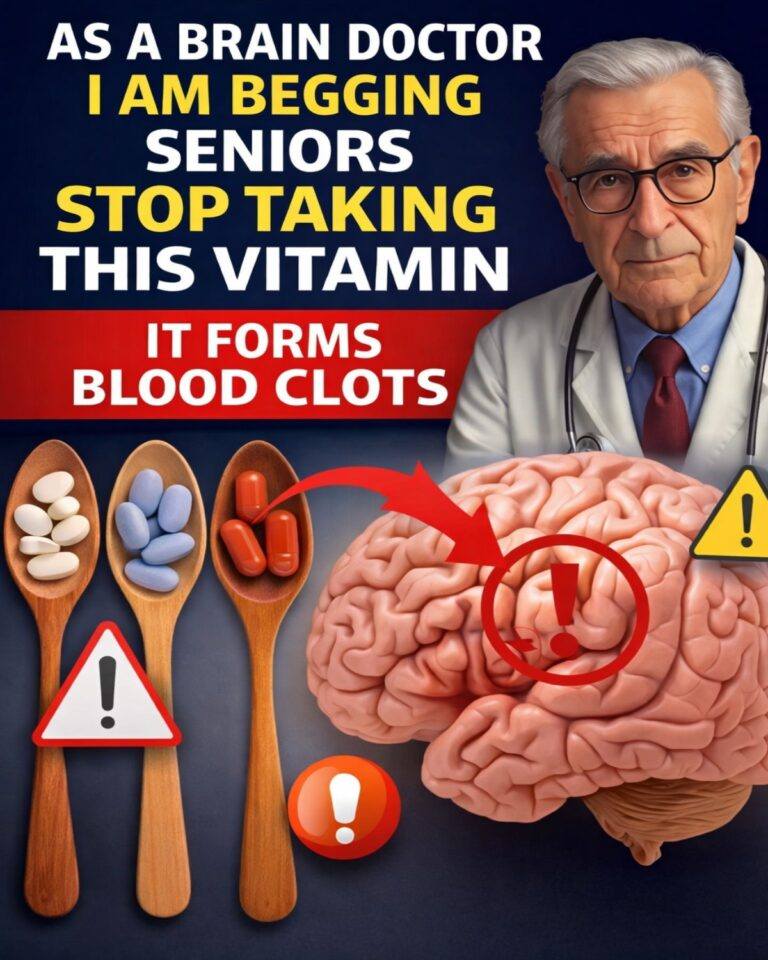
That headline — “THIS vitamin raises stroke risk overnight” — is not medically accurate as stated. It’s clickbait language that exaggerates what research actually shows.
Here’s what the real science says.
🧠 Does any vitamin cause stroke “overnight”?
No vitamin has been shown to trigger a stroke suddenly in healthy people.
Stroke is usually caused by long-term vascular disease, not an acute “instant effect” from a vitamin.
What studies do show is:
- Some supplements can slightly shift stroke risk over time
- Certain high doses can affect blood clotting or bleeding tendency
- Effects happen over weeks to years, not overnight
⚠️ The vitamin most often linked to stroke risk in studies
🟡 Vitamin E (high-dose supplements)
This is the one most “viral claims” are based on.
What research actually shows:
- Slight increase in hemorrhagic stroke (bleeding stroke) risk
- Slight decrease in ischemic stroke (clot-related stroke) risk
- Overall effect is small and not clearly beneficial
Large meta-analyses found:
- ~22% increase in hemorrhagic stroke
- ~10% reduction in ischemic stroke
- Net benefit = unclear, not recommended for routine use (PMC)
🧪 Important clarification
Even in these studies:
- Effects occurred in people taking long-term supplements
- Not from a single dose
- Not “overnight”
- Risk differences were small in absolute numbers
Example: about
- 1 extra bleeding stroke per ~1250 people taking high-dose vitamin E (Medscape)
🧬 Why this confusion happens
Some influencers mix together:
- “Vitamin E affects clotting”
- “stroke subtypes change in studies”
- “supplements ≠ food”
- animal or high-dose trial data
Then they turn it into:
👉 “This vitamin causes overnight stroke risk”
That’s not what clinical evidence supports.
🟢 What vitamins actually do in stroke risk
Some vitamins are actually protective:
- Vitamin C → lower stroke risk in observational studies (PMC)
- B vitamins → may modestly reduce stroke risk in some populations (PMC)
And others only become risky at extreme doses, especially:
- Vitamin E (high-dose supplements)
- Vitamin D (very high toxic levels in rare cases)
🧠 Bottom line
- No vitamin causes stroke “overnight”
- High-dose supplements (especially vitamin E) can slightly alter stroke subtype risk over time
- The real danger is unnecessary high-dose supplementation, not normal dietary intake
If you want, I can break down:
- which supplements genuinely increase clotting or bleeding risk
- or a “safe vitamins for seniors” guide based on real neurology and cardiology data
