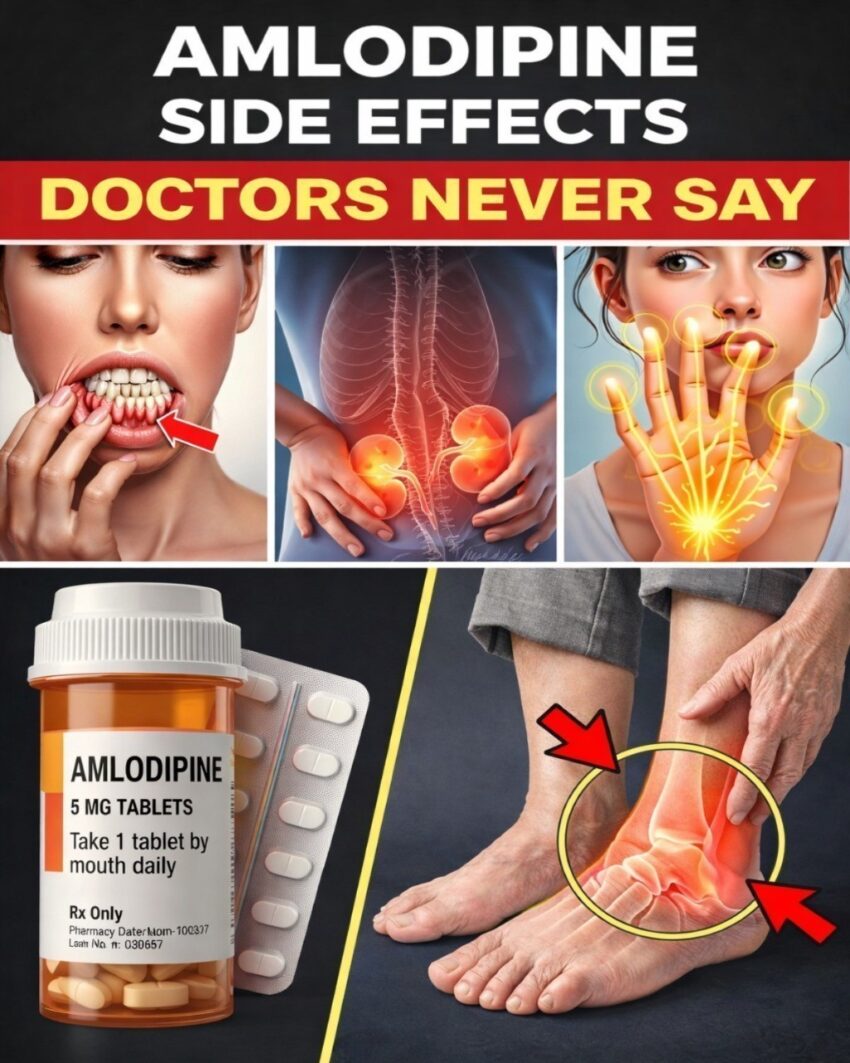
Amlodipine is a commonly used calcium-channel blocker for high blood pressure and angina. Most people tolerate it well, but like all medicines, it can cause side effects—some of which should not be ignored, especially in older adults or people with heart disease.
Below are 12 side effects of amlodipine you should take seriously if they appear or worsen.
⚠️ 12 Amlodipine Side Effects You Should NEVER Ignore
1) Severe swelling (edema) of legs, ankles, or feet
Mild swelling is common, but sudden or severe swelling can indicate fluid imbalance or worsening heart function.
2) Chest pain or worsening angina
If chest pain increases after starting amlodipine, it may signal an underlying heart issue that needs urgent evaluation.
3) Very low blood pressure
Symptoms include:
- dizziness
- fainting
- blurred vision
This can increase fall risk, especially in seniors.
4) Fast or irregular heartbeat
Palpitations or new rhythm changes may suggest cardiovascular instability.
5) Shortness of breath
Could indicate fluid overload or heart failure in susceptible individuals.
6) Severe fatigue or weakness
While mild tiredness is common, extreme weakness may indicate excessive blood pressure lowering.
7) Rapid weight gain
A sudden increase in weight over a few days may indicate fluid retention.
8) Liver problems (rare but serious)
Watch for:
- yellowing of eyes/skin
- dark urine
- persistent nausea
9) Severe dizziness or fainting spells
Especially when standing up, suggesting significant blood pressure drops.
10) Gum swelling or overgrowth (gingival hyperplasia)
A slow-developing but important side effect that can affect oral health.
11) Allergic reactions
Rare but serious signs include:
- rash
- itching
- swelling of face/lips
- difficulty breathing
12) Worsening heart failure symptoms
Signs include:
- increasing breathlessness
- swelling in legs
- inability to lie flat comfortably
🧠 Important medical context
Amlodipine belongs to a class of drugs used to treat hypertension and chest pain, including medications like Amlodipine.
Most side effects are dose-related and manageable, but in older adults or those with heart disease, monitoring is important.
🚨 When to seek urgent help
Get medical attention immediately if you experience:
- chest pain
- fainting
- severe swelling
- breathing difficulty
- signs of allergic reaction
🟢 Key takeaway
Amlodipine is generally safe and widely prescribed, but new or worsening cardiovascular symptoms should never be ignored, especially in high-risk patients.
If you want, I can also explain:
- how to reduce amlodipine side effects naturally
- safer blood pressure alternatives in seniors
- or how to tell normal vs dangerous ankle swelling apart
