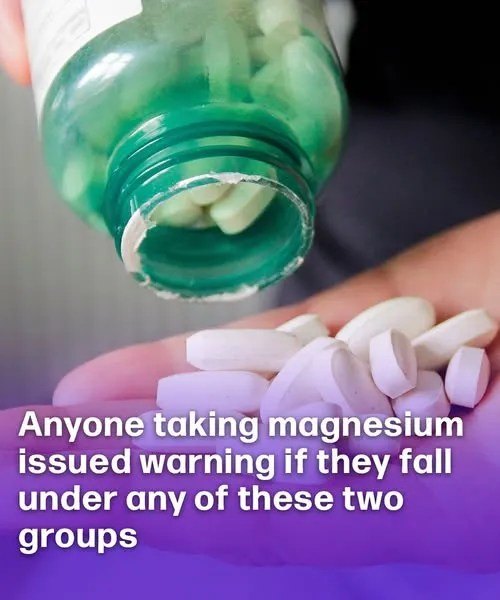
A widely circulated recent health advisory has renewed concern about magnesium supplements, especially because while magnesium is essential for nerve, muscle, and heart function, too much from supplements can be risky in certain people.
What the warning is really about
Experts aren’t saying magnesium is “bad”—they’re emphasizing that supplements can push intake too high, which the body doesn’t always handle safely, unlike magnesium from food.
Most mild side effects are digestive (diarrhea, cramps), but higher doses—especially in vulnerable people—can lead to serious complications like low blood pressure, irregular heartbeat, or magnesium toxicity. (WebMD)
The two high-risk groups doctors are most concerned about
1) People with kidney disease (or reduced kidney function)
This is the biggest risk group.
- The kidneys are responsible for removing excess magnesium
- If kidney function is impaired, magnesium can build up in the blood
- This can lead to hypermagnesemia (magnesium toxicity), which in severe cases may affect breathing and heart rhythm
Experts consistently warn that people with kidney disease should avoid magnesium supplements unless medically supervised. (Healthline)
2) People taking magnesium-containing medications or high-dose laxatives/antacids
This group is often overlooked.
Examples include:
- Some laxatives
- Certain antacids
- Magnesium-based sleep or “calming” supplements taken in high doses or combined products
These can unintentionally stack magnesium intake, especially when combined with a supplement, increasing the risk of overdose-like effects (severe diarrhea, low blood pressure, heart rhythm changes). (NCBI)
Why this warning is trending now
A few reasons health experts are paying more attention:
- Magnesium supplements are extremely popular for sleep, anxiety, and cramps
- Many people take them without checking total daily intake
- Supplements are not tightly regulated like prescription drugs
- Kidney disease is common and often undiagnosed in early stages
Important context (often missed)
- Magnesium from food (nuts, grains, vegetables) is generally safe even at high intake because the body regulates it well
- Problems mainly come from supplements or medication combinations (Office of Dietary Supplements)
Bottom line
The warning is not about avoiding magnesium—it’s about:
- Avoiding unnecessary high-dose supplements
- Being cautious if you have kidney disease
- Being careful if you already use magnesium-containing medicines
If you want, I can break down:
- safe daily magnesium limits for adults
- signs of too much magnesium vs deficiency
- or which magnesium forms (glycinate, citrate, etc.) are safest for sleep or cramps
