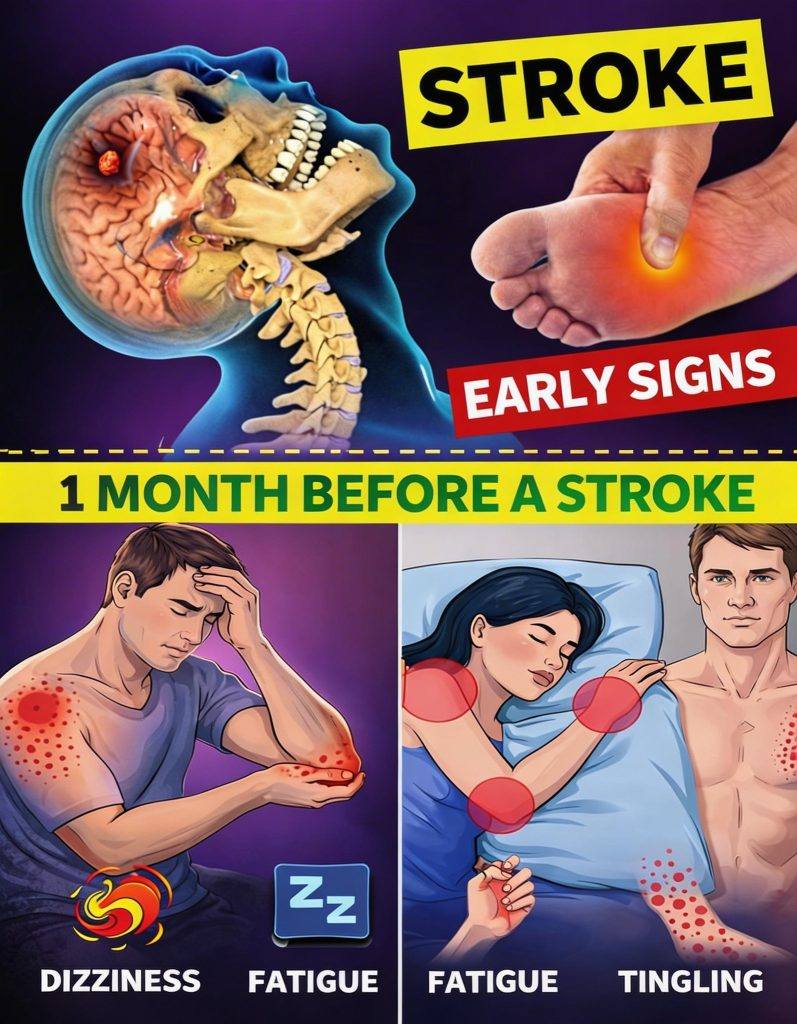
Stroke is a medical emergency, and in many cases it happens suddenly without much warning. However, some people do experience early warning signs, especially in the form of short-lived symptoms caused by reduced blood flow to the brain (often called a mini-stroke or TIA).
So instead of thinking “8 guaranteed signs one month before,” it’s more accurate to understand: there are possible early signals that may appear days or weeks before a stroke in some people.
Here’s a clear, realistic breakdown.
8 Possible Early Warning Signs Before a Stroke
These symptoms may come and go. Even if they disappear, they should never be ignored.
1. Sudden numbness or weakness
Especially on one side of the face, arm, or leg. This is one of the most important red flags.
2. Temporary speech problems
Slurred speech, difficulty finding words, or confusion while talking.
3. Sudden vision changes
Blurry vision, double vision, or loss of vision in one eye.
4. Unexplained dizziness or balance issues
Feeling unsteady, trouble walking, or loss of coordination.
5. Sudden severe headache
A “worst headache of life,” especially if it comes without a known cause.
6. Short episodes of confusion
Difficulty understanding conversations or processing information.
7. Brief paralysis or heaviness
Feeling like a limb suddenly becomes weak or “dead,” then improves.
8. Transient ischemic attack (TIA) symptoms
Mini-stroke episodes that last minutes to hours and fully resolve, but signal high stroke risk.
Important: A TIA is a serious warning sign of a future Stroke and requires urgent medical evaluation.
9 Powerful Tips to Help Prevent Stroke
Prevention is strongly linked to lifestyle and medical control of risk factors.
1. Control blood pressure
High blood pressure is the #1 risk factor. Regular monitoring is essential.
2. Manage blood sugar
Diabetes increases stroke risk significantly.
3. Keep cholesterol in check
High LDL (“bad cholesterol”) can block brain arteries.
4. Stay physically active
Aim for at least 30 minutes of moderate activity most days.
5. Eat a brain-healthy diet
Focus on vegetables, fruits, whole grains, fish, nuts, and reduce fried/processed foods.
6. Quit smoking
Smoking damages blood vessels and doubles stroke risk.
7. Limit excess salt and sugar
Helps control blood pressure and metabolic health.
8. Maintain a healthy weight
Obesity increases strain on the heart and arteries.
9. Treat heart conditions properly
Especially atrial fibrillation or other rhythm problems that can cause clots.
When to seek emergency help
If any sudden symptoms appear—even if they go away—do not wait. Immediate treatment can prevent brain damage.
If you want, I can also explain:
- how to recognize a stroke in 10 seconds (FAST test)
- difference between stroke and TIA
- or stroke risk factors specific to age or lifestyle in Pakistan
