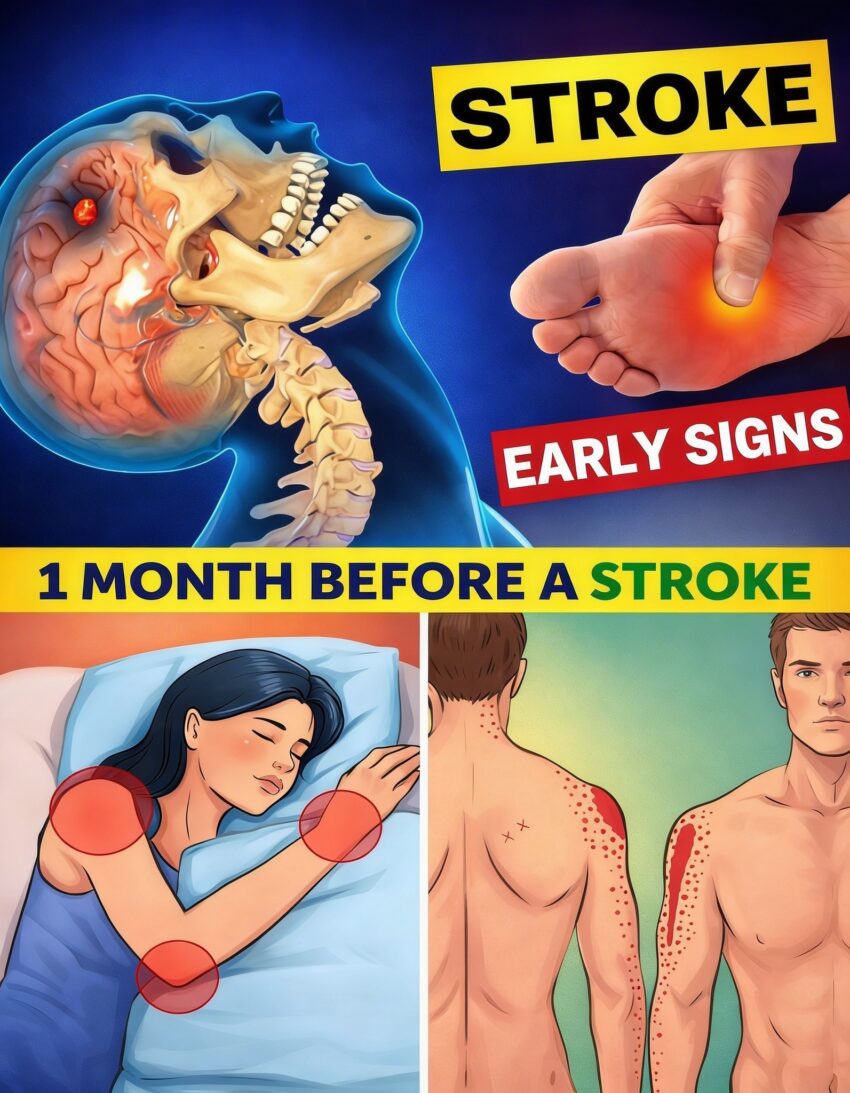
A stroke happens when blood flow to part of the brain is interrupted, and brain cells start to die quickly. Most strokes are sudden, but in some cases warning signs can appear days to weeks before, often due to a transient ischemic attack (TIA) or “mini-stroke.”
Below is a clear, medically grounded overview.
⚠️ 8 Possible Warning Signs of Stroke (or TIA) Before It Happens
These may appear intermittently in the days or weeks leading up to a major stroke:
1. Sudden numbness or weakness
Especially on one side of the face, arm, or leg.
2. Temporary vision problems
- Blurred vision
- Double vision
- Loss of vision in one eye
3. Slurred or unclear speech
Trouble forming words or understanding others.
4. Sudden dizziness or balance issues
Feeling unsteady, difficulty walking straight.
5. Unexplained severe headache
Especially a “worst-ever” headache with no clear cause.
6. Confusion or memory problems
Sudden difficulty understanding simple things.
7. Brief episodes of paralysis or heaviness
Short-lived weakness that improves within minutes or hours (classic TIA sign).
8. Tingling or loss of sensation
Pins-and-needles feeling, usually one-sided.
Important note
These symptoms may last only a few minutes or hours and then disappear. That is exactly why they are dangerous—people often ignore them. A TIA is a major warning that a full stroke may follow soon, sometimes within days or weeks.
🛡️ 9 Tips to Prevent Stroke
1. Control blood pressure
High blood pressure is the number one stroke risk factor.
2. Manage blood sugar (diabetes control)
Uncontrolled diabetes damages blood vessels.
3. Reduce cholesterol
High LDL can clog arteries leading to the brain.
4. Quit smoking
Smoking sharply increases stroke risk by damaging arteries.
5. Stay physically active
At least 30 minutes of moderate exercise most days.
6. Eat a heart-healthy diet
Focus on:
- Fruits and vegetables
- Whole grains
- Fish, nuts, healthy oils
Limit salt, sugar, and fried foods.
7. Maintain a healthy weight
Obesity increases risk of hypertension and diabetes.
8. Limit alcohol
Heavy drinking raises blood pressure and stroke risk.
9. Treat heart conditions
Especially atrial fibrillation (irregular heartbeat), which can cause blood clots.
🚨 When to act immediately
If someone suddenly develops:
- Face drooping
- Arm weakness
- Speech difficulty
Call emergency services immediately (think FAST: Face, Arm, Speech, Time). Early treatment can prevent permanent brain damage.
If you want, I can also explain:
- Difference between stroke and TIA in simple terms
- Early tests doctors use to detect stroke risk
- Or a checklist for high-risk people (like hypertension or diabetes patients)
