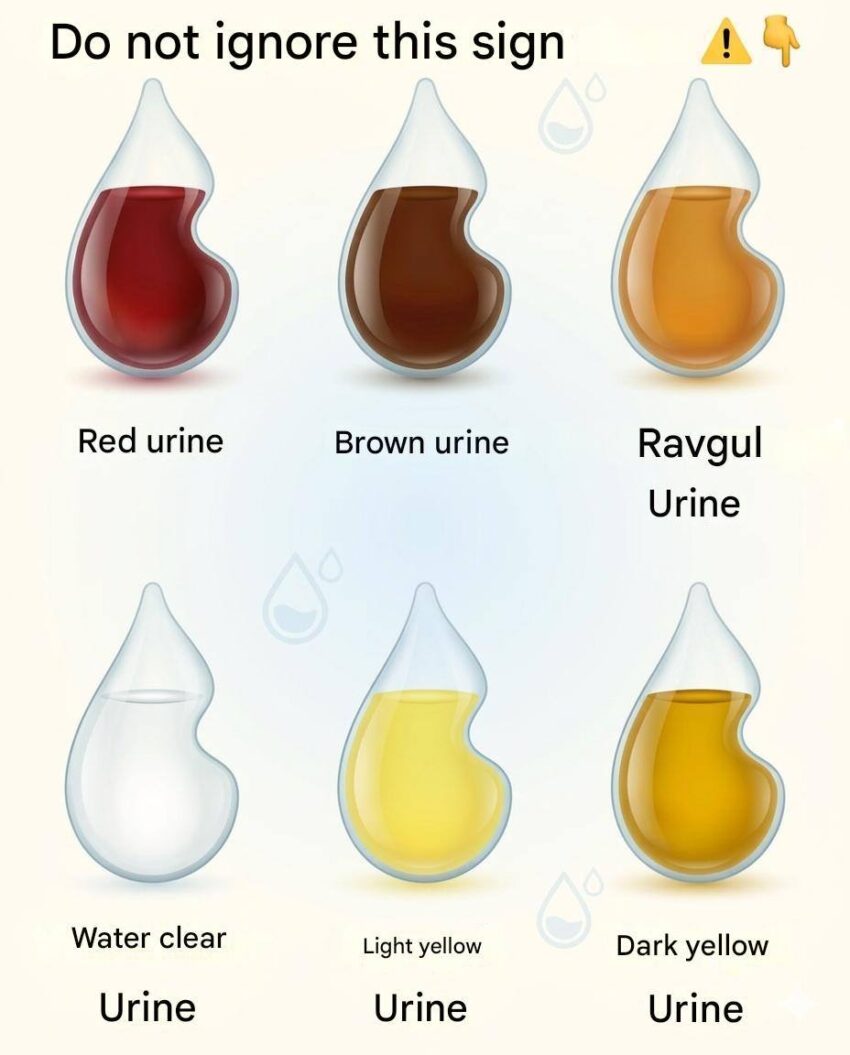
What Does the Color of Your Urine Say About Your Health?
Urine color can give useful clues about your hydration level and sometimes your overall health. However, it is not a diagnosis by itself—diet, medicines, and lifestyle can all affect it.
Here’s a simple guide to what different urine colors may mean:
🟡 1. Light yellow (straw-colored) — Normal and healthy
This is the ideal urine color.
It usually means:
- You are well hydrated
- Your body is functioning normally
A pigment called urochrome naturally gives urine its yellow color.
💧 2. Very pale or clear — Overhydration
If your urine is almost transparent:
- You may be drinking too much water
- Electrolytes in your body may become slightly diluted
Usually not dangerous, but balance matters.
🌑 3. Dark yellow or amber — Dehydration warning
This often means:
- You are not drinking enough fluids
- Your body is conserving water
It’s a common early sign of dehydration.
🟠 4. Orange urine — Possible causes
Orange urine can happen due to:
- Dehydration
- Certain medications
- High levels of bilirubin (liver-related issue)
If it persists, it may sometimes be linked with liver or bile conditions.
🔴 5. Pink or red — Blood or food pigments
This can look alarming.
Possible causes:
- Eating beetroot, berries, or food dyes
- Blood in urine (hematuria)
Blood in urine may be linked to conditions like urinary tract infection, kidney stones, or other urinary tract issues. If it happens without food explanation, it should be checked by a doctor.
🟤 6. Brown or cola-colored — Possible liver or muscle issue
This may indicate:
- Severe dehydration
- Liver problems (bilirubin buildup)
- Muscle breakdown in rare cases
If persistent, medical evaluation is important.
🟢 7. Blue or green — Rare but possible
Uncommon causes include:
- Certain medications or dyes
- Rare bacterial infections like pseudomonas infection
Usually temporary and not serious, but should be checked if unexplained.
⚠️ When should you worry?
You should consult a doctor if:
- Blood appears in urine without a known cause
- Dark color persists despite hydration
- Urination is painful or burning
- Fever or back pain is present
🧠 Bottom line
Most urine color changes are related to:
- Hydration level
- Diet
- Medications
But persistent abnormal colors—especially red, brown, or unexplained changes—may signal an underlying medical issue that needs attention.
If you want, I can also make a simple color chart image or short version for social media.
