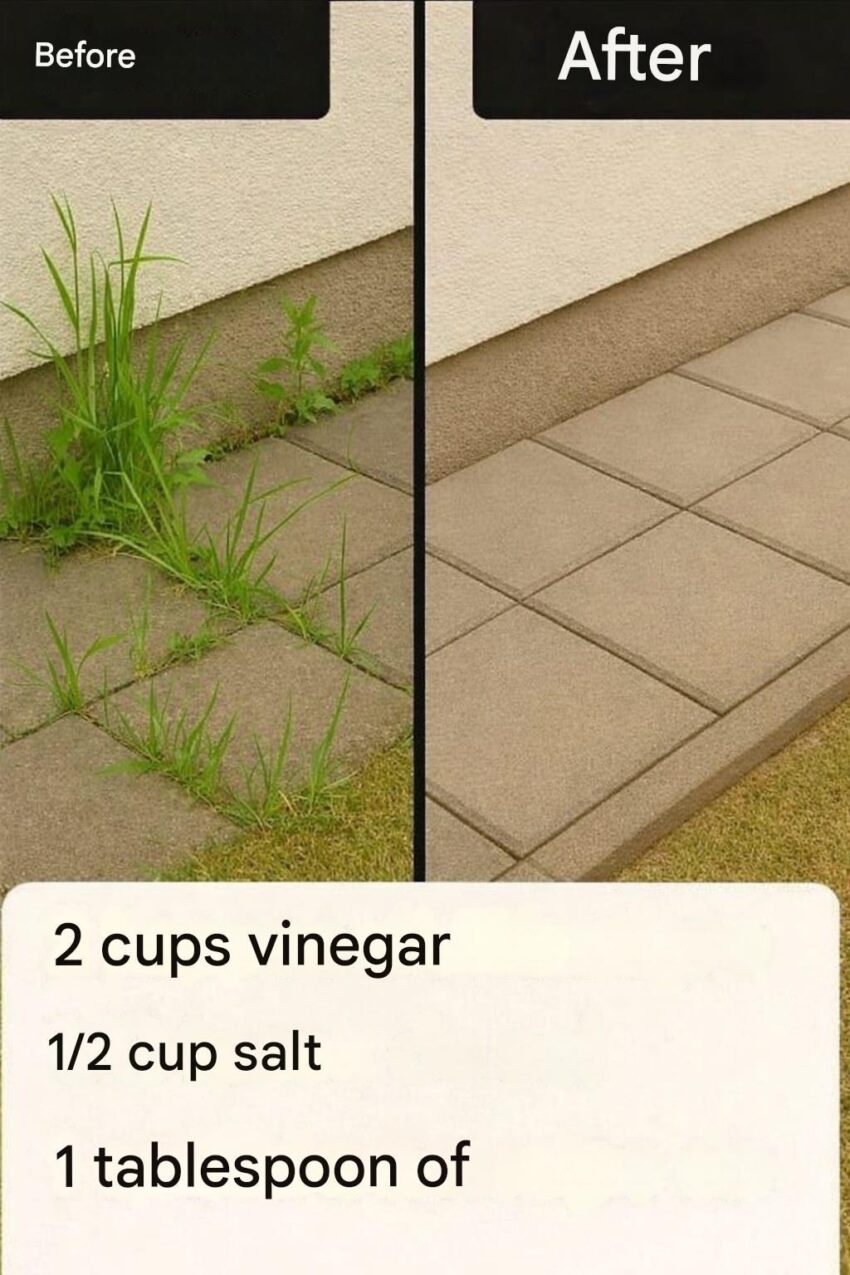
A “super effective” homemade herbicide is possible, but there’s a tradeoff: the stronger it is, the less selective it becomes—it will kill or damage any plant it touches, not just weeds. So the key is using the right mix and applying it carefully.
🌿 Simple & Effective DIY Herbicide
This is one of the most widely used homemade formulas:
Ingredients:
- 1 gallon (about 3.8 L) white vinegar (5% acetic acid)
- 1 cup salt (table salt or rock salt)
- 1 tablespoon dish soap (any standard brand)
Instructions:
- Warm a little vinegar and dissolve the salt in it.
- Mix it back into the rest of the vinegar.
- Add dish soap and stir gently (don’t foam it up too much).
- Pour into a spray bottle.
How it works:
- Vinegar burns the plant tissue.
- Salt dehydrates and disrupts growth.
- Soap helps the solution stick to leaves.
⚠️ How to Use It Properly
- Spray directly on weed leaves (not the soil if you plan to grow anything there).
- Apply on a hot, sunny day—heat boosts effectiveness.
- Avoid windy conditions to prevent drift onto good plants.
- Repeat after a few days for tough weeds.
🚫 Important Warnings
- Non-selective: This kills grass, flowers, vegetables—anything it touches.
- Soil damage: Salt can make soil infertile long-term if overused.
- Not great for deep-root weeds: It mainly kills the top growth; roots may regrow.
🌱 Stronger Version (Use Carefully)
For tougher weeds, you can use:
- Stronger vinegar (10–20% acetic acid, sometimes sold as horticultural vinegar)
This is much more potent but can irritate skin and eyes—wear gloves and avoid inhaling spray.
If you want something more targeted (like killing weeds in lawns without harming grass, or getting rid of specific weeds like dandelions), tell me—I can suggest safer or more precise options.
