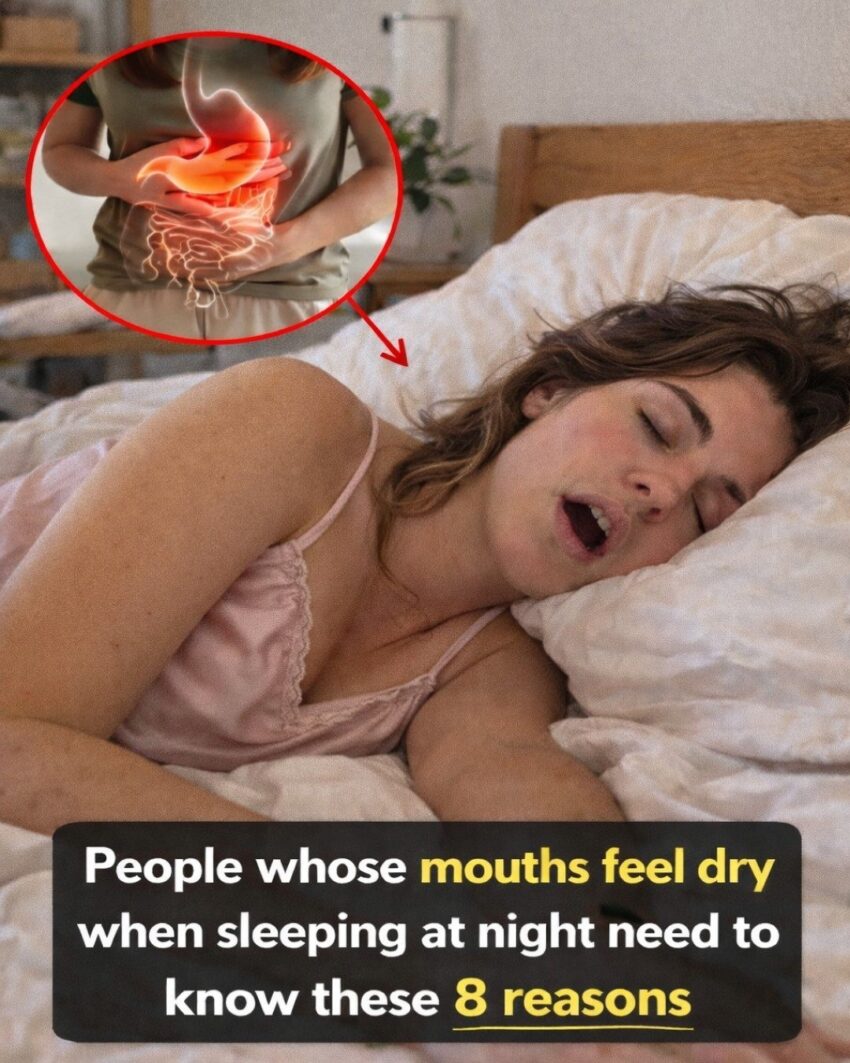
Waking up with a dry mouth is very common, and most of the time it’s not serious. It usually happens because your mouth produces less saliva during sleep or you’re breathing in a way that dries it out.
Here are 8 possible causes:
😴 1. Mouth breathing during sleep
If you sleep with your mouth open, air dries out saliva quickly.
Common reasons:
- Habit
- Blocked nose
- Sleep position
This is one of the most common causes.
🤧 2. Nasal congestion (cold, allergies, sinus issues)
If your nose is blocked, your body switches to mouth breathing.
Conditions like allergies or sinus problems can contribute.
💧 3. Dehydration
Not drinking enough fluids during the day can lead to:
- Dry mouth in the morning
- Thicker saliva
- Thirst after waking
💊 4. Medications
Many medicines can reduce saliva, such as:
- Antihistamines
- Antidepressants
- Blood pressure drugs
- Sleeping pills
😴 5. Sleep apnea
A serious condition where breathing repeatedly stops during sleep.
It can cause:
- Mouth breathing
- Dry mouth in the morning
- Snoring and tiredness
This may be related to obstructive sleep apnea.
🍷 6. Alcohol or caffeine before bed
- Alcohol dries out tissues
- Caffeine can mildly dehydrate and affect sleep quality
🚬 7. Smoking or tobacco use
Smoking irritates the mouth and reduces saliva production over time.
🧠 8. Salivary gland issues (less common)
Conditions affecting saliva production can cause chronic dryness, such as xerostomia.
⚠️ When to be concerned
See a doctor if dry mouth:
- Happens every day for weeks
- Comes with swallowing difficulty
- Causes mouth sores or bad taste
- Occurs with severe fatigue or snoring
✔️ Simple ways to reduce it
- Drink water regularly
- Treat nasal congestion
- Avoid alcohol before bed
- Try sleeping on your side
- Use a humidifier if air is dry
🧠 Bottom line
Waking up with a dry mouth is usually due to mouth breathing, dehydration, or medications, but in some cases it can signal sleep-related breathing issues.
If you want, I can also explain how to tell if your dry mouth is harmless or linked to sleep apnea in a simple checklist.
