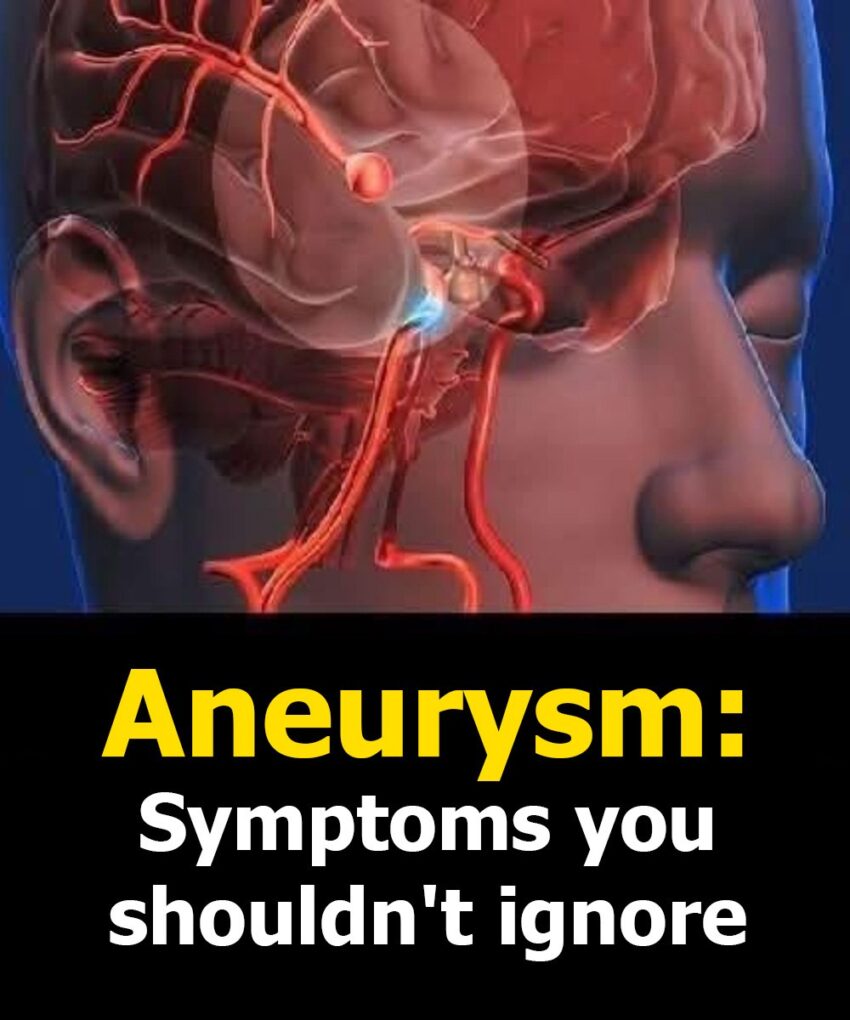
🧠 Aneurysm: Signs You Shouldn’t Ignore
An aneurysm is a serious condition where a blood vessel wall weakens and bulges. If it ruptures, it can become life-threatening very quickly. The most well-known type is a brain aneurysm, but aneurysms can also occur in other parts of the body.
⚠️ Important reality
Most aneurysms don’t cause symptoms until they grow large or rupture, which is why recognizing warning signs early can be critical.
🚨 Signs of a possible ruptured aneurysm (medical emergency)
Seek immediate medical help if someone experiences:
💥 1. Sudden, severe headache
- Often described as the “worst headache of my life”
🤢 2. Nausea and vomiting
- Especially with sudden headache
👁️ 3. Vision problems
- Blurred or double vision
😖 4. Neck stiffness
- Difficulty moving the neck
🧠 5. Confusion or loss of consciousness
- Disorientation, fainting, or coma
🌞 6. Sensitivity to light
- Pain when exposed to bright light
These symptoms may indicate a rupture leading to bleeding in the brain, such as a subarachnoid hemorrhage.
⚠️ Signs of an unruptured aneurysm (often subtle)
Some people may notice:
👁️ 1. Pain behind or above one eye
😵 2. Dilated pupil
😐 3. Numbness or weakness on one side of the face
👀 4. Vision changes
These symptoms happen when the aneurysm presses on nearby nerves.
🧬 Risk factors
You may be at higher risk if you have:
- High blood pressure
- Smoking habit
- Family history of aneurysms
- Older age
- Certain genetic conditions
🏥 When to act
👉 Call emergency services immediately if there is:
- Sudden severe headache
- Loss of consciousness
- Neurological symptoms
Do not wait—ruptured aneurysms are life-threatening.
✔️ Bottom line
- Aneurysms are often silent but can become dangerous if they rupture
- Sudden, intense symptoms—especially a severe headache—should never be ignored
- Early medical attention can be lifesaving
