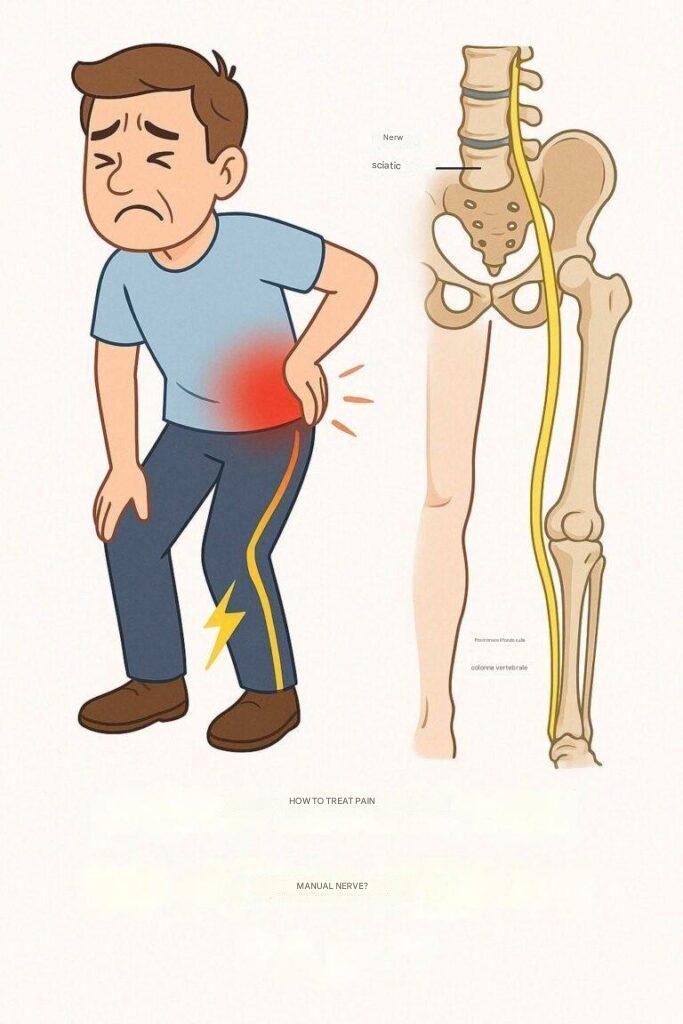
Sciatica (pain radiating from the lower back into the leg) is often caused by irritation or compression of the sciatic nerve. Gentle movement and stretching can help reduce pressure and improve mobility—but avoid anything that sharply increases pain.
Here are 3 commonly recommended exercises that may help relieve sciatica-related leg pain:
1) Knee-to-Chest Stretch
This helps loosen the lower back and glute muscles that can press on the sciatic nerve.
How to do it:
- Lie on your back with knees bent.
- Pull one knee slowly toward your chest.
- Hold for 20–30 seconds.
- Switch legs, then repeat 2–3 times each side.
Tip: Keep your lower back relaxed on the floor.
2) Piriformis Stretch (Figure-4 Stretch)
The piriformis muscle (deep in the buttock) can irritate the sciatic nerve when tight.
How to do it:
- Lie on your back.
- Cross your right ankle over your left knee (forming a “4” shape).
- Pull your left thigh toward your chest.
- Hold 20–30 seconds, then switch sides.
You should feel a stretch in the buttock, not sharp pain.
3) Sciatic Nerve Glide (Gentle Flossing)
This helps the nerve move more freely without being overly stretched.
How to do it:
- Sit upright in a chair.
- Extend one leg slowly while pointing your toes up.
- Then bend the knee and relax the foot back down.
- Repeat 10–15 times per leg, slowly and smoothly.
Important: This should feel like a mild tension—not pain.
Safety notes
- Stop if pain shoots sharply down the leg.
- Avoid heavy lifting or deep forward bends during flare-ups.
- Consistency matters more than intensity.
If your symptoms include numbness, weakness, or worsening pain, it’s worth getting evaluated by a healthcare professional.
If you want, I can also give you a simple 10-minute daily routine combining these exercises for faster relief.
