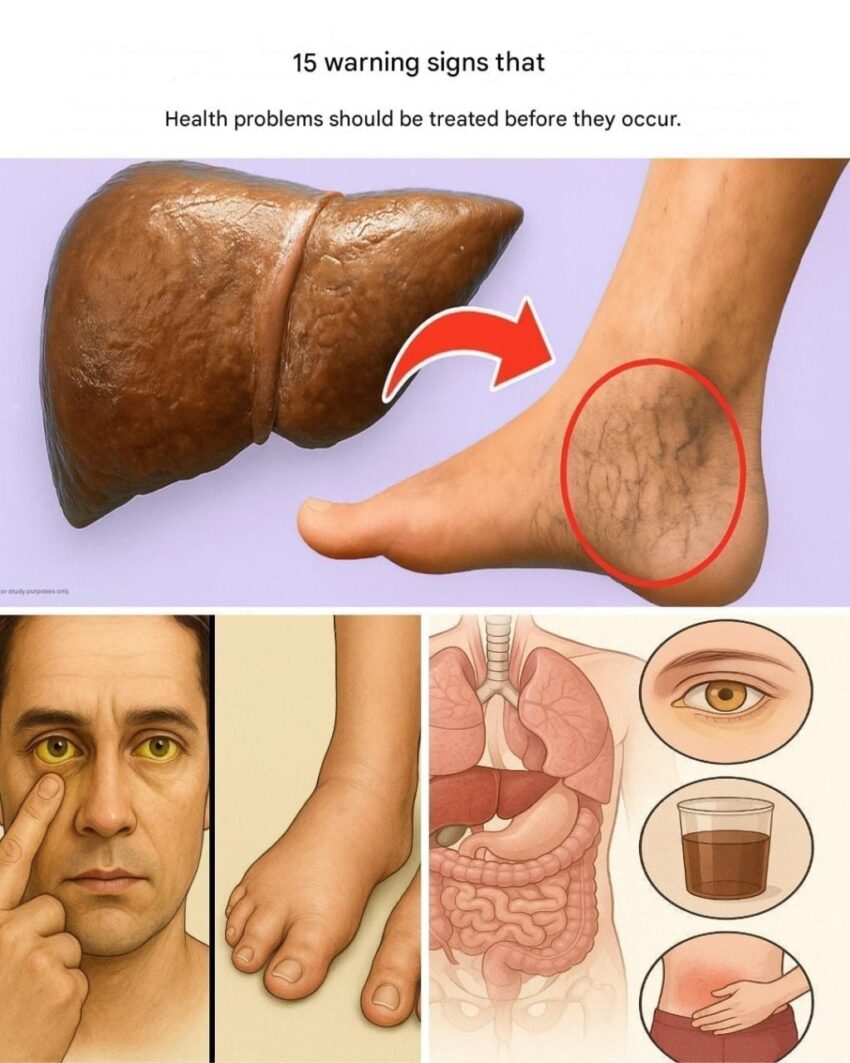
Your liver is a “silent” organ in the sense that it can be under stress for a long time before obvious symptoms appear. That’s why early warning signs are often subtle and easy to ignore. Still, none of these symptoms alone confirms liver disease—they can come from many causes—so think of them as “possible signals,” not a diagnosis.
Here are 15 silent warning signs your liver may be struggling:
1. Constant fatigue
Feeling unusually tired even after rest can happen when the liver is less efficient at filtering toxins and managing energy.
2. Loss of appetite
A reduced desire to eat, especially for no clear reason, can be an early metabolic change.
3. Unexplained weight loss
Not dieting but still losing weight may signal impaired digestion or metabolism.
4. Nausea or mild vomiting
Frequent queasiness, especially after fatty meals, can be linked to liver stress.
5. Bloating or abdominal discomfort
A feeling of fullness or pressure on the upper right side of the abdomen is common in early liver issues.
6. Dark urine
Urine becoming noticeably darker (like tea or cola) can indicate bile imbalance.
7. Pale or clay-colored stool
Changes in stool color may suggest reduced bile flow.
8. Itchy skin
Persistent, unexplained itching can be related to bile salt buildup under the skin.
9. Yellowing of eyes or skin (jaundice)
Even mild yellow tinting is a significant warning sign that bilirubin is building up.
10. Swelling in legs or ankles
Fluid retention can happen when liver function affects protein balance.
11. Easy bruising or bleeding
The liver produces clotting factors—when it’s under strain, bruising can increase.
12. Brain fog or difficulty concentrating
Toxins not properly filtered can affect mental clarity and focus.
13. Spider-like blood vessels on skin
Small, web-like red veins (spider angiomas) may appear on chest or face.
14. Red palms (palmar erythema)
Unusual redness in the palms can sometimes be linked to liver hormone processing changes.
15. Swollen abdomen (ascites in advanced cases)
Fluid buildup in the belly is a more serious sign and needs urgent medical attention.
Important reality check
These signs are not specific to liver disease alone—they can overlap with infections, hormonal issues, diet problems, or other conditions. The liver also often compensates well, so symptoms may appear late.
When to act
You should consider medical evaluation if:
- Multiple symptoms appear together
- Symptoms persist for more than a few weeks
- You notice jaundice, swelling, or dark urine
A simple blood test (LFTs), ultrasound, or hepatitis screening can quickly clarify what’s going on.
If you want, I can also explain early liver damage causes (fatty liver, hepatitis, alcohol, medications) or how to support liver health naturally with diet and habits.
