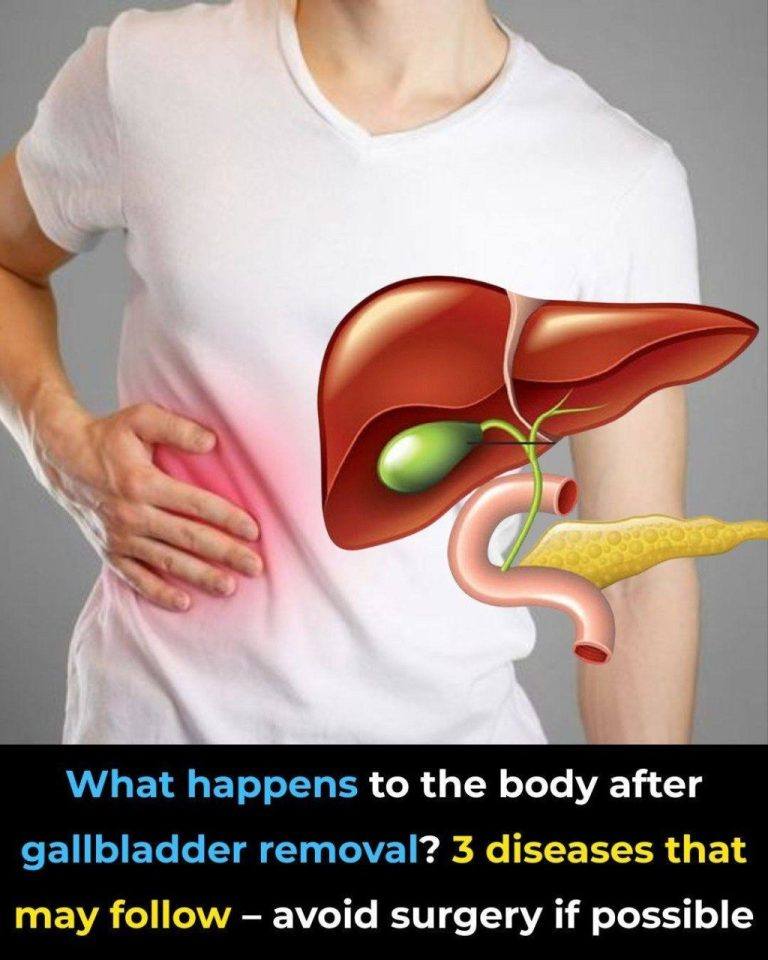
The idea behind that headline (“avoid surgery if possible”) is misleading. If a gallbladder is causing serious problems, surgery is often the definitive and safest treatment. Delaying necessary removal can actually increase risks like infection, pancreatitis, or bile duct blockage.
That said, it’s useful to understand what actually happens after gallbladder removal (cholecystectomy) and what issues can occasionally follow.
What the gallbladder normally does
Your gallbladder is a small storage pouch under the liver. It:
- Stores bile (a digestive fluid made by the liver)
- Releases it in a controlled way when you eat fatty food
After removal, bile no longer gets stored—it drips continuously into the intestines.
Most people adapt well to this change.
What happens to the body after removal
For many people:
- Digestion returns to normal after a few weeks
- No major long-term dietary restrictions are needed
- Life continues normally without a gallbladder
Some people, however, experience ongoing digestive changes.
3 common problems that may follow gallbladder removal
1) Post-cholecystectomy syndrome
This is a broad term for symptoms that persist or appear after surgery, such as:
- Abdominal discomfort
- Bloating
- Indigestion
- Nausea
It can be caused by bile flow changes, but sometimes it’s due to unrelated digestive issues that were already present.
2) Bile acid diarrhea (fat digestion issues)
Because bile flows continuously into the intestine:
- Some people develop loose stools or urgency
- Especially after fatty meals
This happens because excess bile irritates the colon in some individuals.
It is usually manageable with diet changes or medication.
3) Sphincter of Oddi dysfunction or bile duct problems
In some cases:
- The muscle controlling bile flow (sphincter of Oddi) may spasm or function abnormally
- Or small gallstones may still form in bile ducts (less common)
Symptoms can include:
- Upper abdominal pain
- Episodes of nausea or bloating
These cases are less common but may require further evaluation.
Important reality check
Despite these possibilities:
- Most people (well over 80–90%) do NOT develop serious long-term problems
- Gallbladder removal is one of the most common and safest surgeries worldwide
- It prevents dangerous complications like infected gallbladder (cholecystitis) or pancreatitis
When surgery is usually necessary
Doctors typically recommend removal if there are:
- Recurrent gallstone pain attacks
- Gallbladder inflammation
- Blocked bile ducts
- Pancreatitis caused by gallstones
In these situations, avoiding surgery can be more dangerous than having it.
Bottom line
Gallbladder removal does change how bile flows, and a small percentage of people experience digestive symptoms afterward. But for most patients, the body adapts well and quality of life improves—because the original problem is removed.
If you want, I can also explain:
- How to avoid digestive issues after surgery
- Diet tips after gallbladder removal
- Or whether someone personally might or might not need surgery based on symptoms
