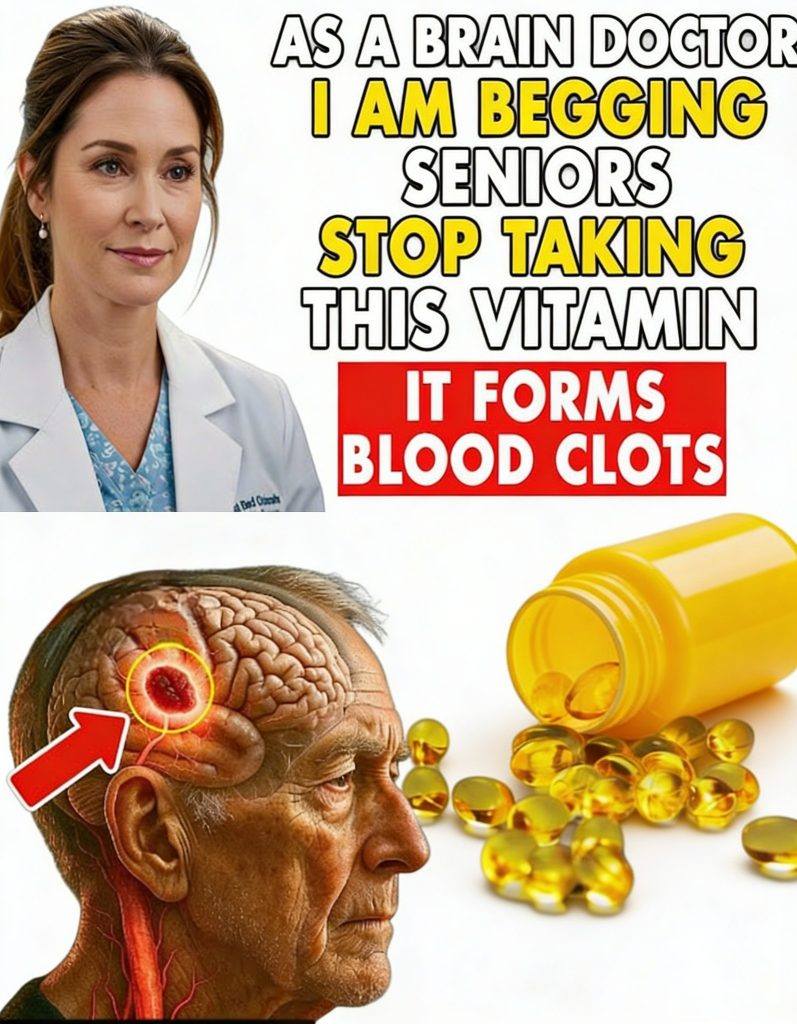
The claim “As a brain doctor, I’m shocked this vitamin raises stroke risk overnight” is a viral-style headline, not a standard medical conclusion—and it’s misleading in how it frames the science.
Here’s what the actual evidence says in a grounded way:
1) There is NO vitamin that “raises stroke risk overnight”
No credible clinical research shows that a normal dose of any vitamin suddenly causes a stroke “overnight.”
Stroke risk is influenced by:
- long-term blood vessel health
- blood pressure
- cholesterol
- diabetes
- smoking
- age
- clotting disorders
Supplements don’t typically act like an instant trigger in isolation.
2) Where the confusion comes from (real but misrepresented risks)
Some vitamins can affect stroke risk over time, especially in high doses or specific conditions:
⚠️ Vitamin E (high-dose supplements)
- Some studies suggest increased risk of hemorrhagic stroke (bleeding type), not sudden stroke overnight
- Effect seen with long-term high-dose use, not single intake
(NCBI)
⚠️ Niacin (Vitamin B3, high doses)
- Can affect blood vessels and liver in high pharmacological doses used for cholesterol
- Risk depends on medical dosing, not normal diet or standard multivitamins
(Health)
⚠️ Fish oil / omega-3 (in some people)
- Mixed evidence; may slightly increase bleeding tendency in certain groups, but also protective for others
(Health)
⚠️ Vitamin D / B vitamins
- Generally safe in normal doses
- Studies mostly show neutral or mixed effects on stroke risk, not sudden danger
(PubMed)
3) Why “overnight stroke risk” claims spread online
These headlines usually come from:
- YouTube health influencers
- clickbait “doctor reacts” videos
- exaggerated interpretations of real studies
- mixing up relative risk vs absolute risk
They often take:
“High-dose supplement may slightly increase risk in a subgroup”
and turn it into:
“This vitamin causes strokes overnight”
That’s not how physiology or clinical evidence works.
4) The real medical takeaway (important)
A more accurate statement would be:
- Some supplements can be harmful in high doses
- Risk depends on dose, duration, age, and medical conditions
- Most people do NOT need high-dose vitamins unless prescribed
- Food-based nutrients are generally safer than megadoses
5) When to actually worry
You should be cautious if:
- you take high-dose single vitamins long-term
- you combine supplements with blood thinners (like aspirin or warfarin)
- you have prior stroke, heart disease, or bleeding disorders
- you’re taking multiple overlapping supplements unknowingly
Bottom line
There is no scientific evidence that a vitamin causes stroke “overnight.”
There is evidence that excess or inappropriate supplement use over time can affect cardiovascular risk, especially in vulnerable people.
If you want, tell me which vitamin the video claimed was dangerous—I can break down that specific one with real clinical data so you can separate fact from fear-based content.
