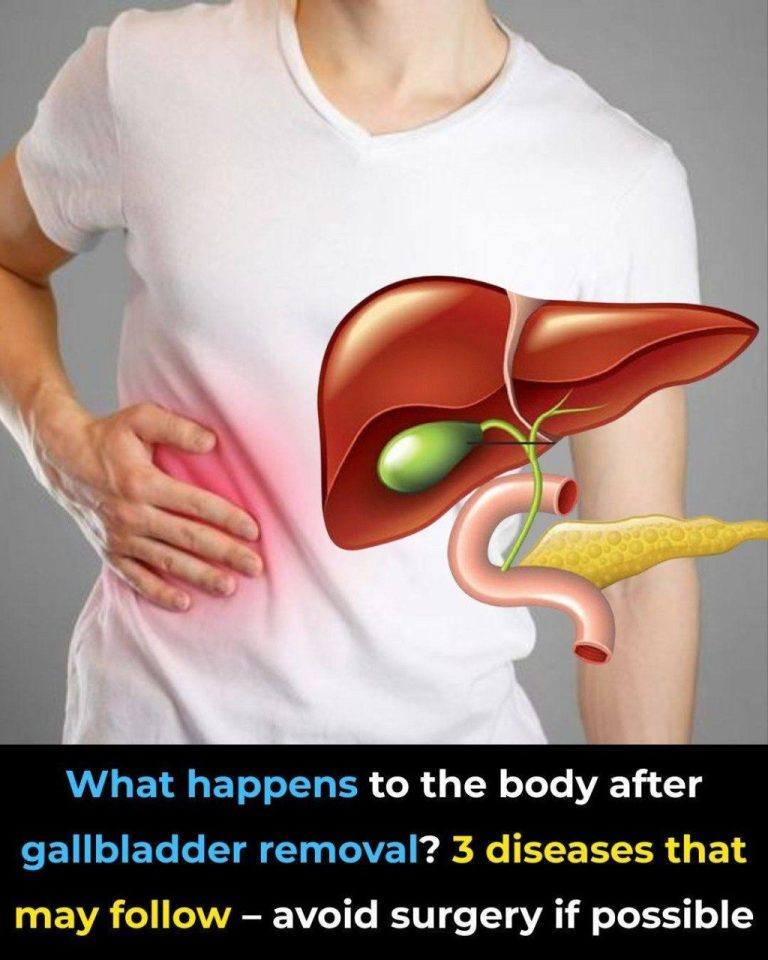
Gallbladder removal (called cholecystectomy) is one of the most common abdominal surgeries, usually done to treat painful gallstones or gallbladder inflammation. Most people live completely normal lives afterward—but the body does go through a period of adjustment.
What changes after gallbladder removal?
The gallbladder doesn’t make bile; it only stores and concentrates it. After removal:
- The liver still produces bile normally
- Bile flows continuously into the small intestine instead of being stored and released in bursts
- Fat digestion still works, but may be slightly less “coordinated” at first
Most people adapt within weeks to months.
Possible effects or complications (not “3 inevitable diseases”)
Online claims about “3 diseases that follow gallbladder removal” are often exaggerated. There is no set trio of diseases that everyone develops. However, a small percentage of people may experience the following conditions:
1) Postcholecystectomy syndrome
Postcholecystectomy syndrome
This is a group of symptoms rather than a single disease. It can include:
- Bloating or indigestion
- Abdominal discomfort
- Nausea or diarrhea
Often linked to bile flow changes or unrelated digestive issues that were already present before surgery.
2) Bile acid diarrhea (bile malabsorption)
Bile acid malabsorption
Because bile flows continuously into the intestine, some people get:
- Frequent loose stools, especially after fatty meals
- Urgency after eating
This is usually manageable with diet changes or medication that binds bile acids.
3) Sphincter of Oddi dysfunction (rare)
Sphincter of Oddi dysfunction
A rare condition where the muscle controlling bile/pancreatic juice flow becomes overly tight, causing:
- Upper abdominal pain
- Sometimes elevated liver or pancreatic enzymes
It is uncommon and not directly caused in most patients by surgery alone.
Important reality check
- These issues are not guaranteed outcomes
- Most people (over 80–90%) recover without long-term problems
- Severe complications are uncommon and usually treatable if they occur
About “avoid surgery if possible”
It’s understandable to want to avoid surgery, but gallbladder removal is recommended when risks of not operating are higher, such as:
- Repeated gallstone attacks
- Infection or inflammation of the gallbladder
- Blockage of bile ducts or pancreatitis risk
Delaying needed surgery can sometimes lead to more dangerous complications, not fewer.
Bottom line
Gallbladder removal changes how bile is delivered, not whether digestion works. A minority of people experience digestive symptoms afterward, but “three diseases that follow” is an oversimplification that doesn’t reflect medical evidence.
If you want, tell me your symptoms or situation (stones, pain pattern, ultrasound findings), and I can explain whether surgery is typically considered necessary in that case.
