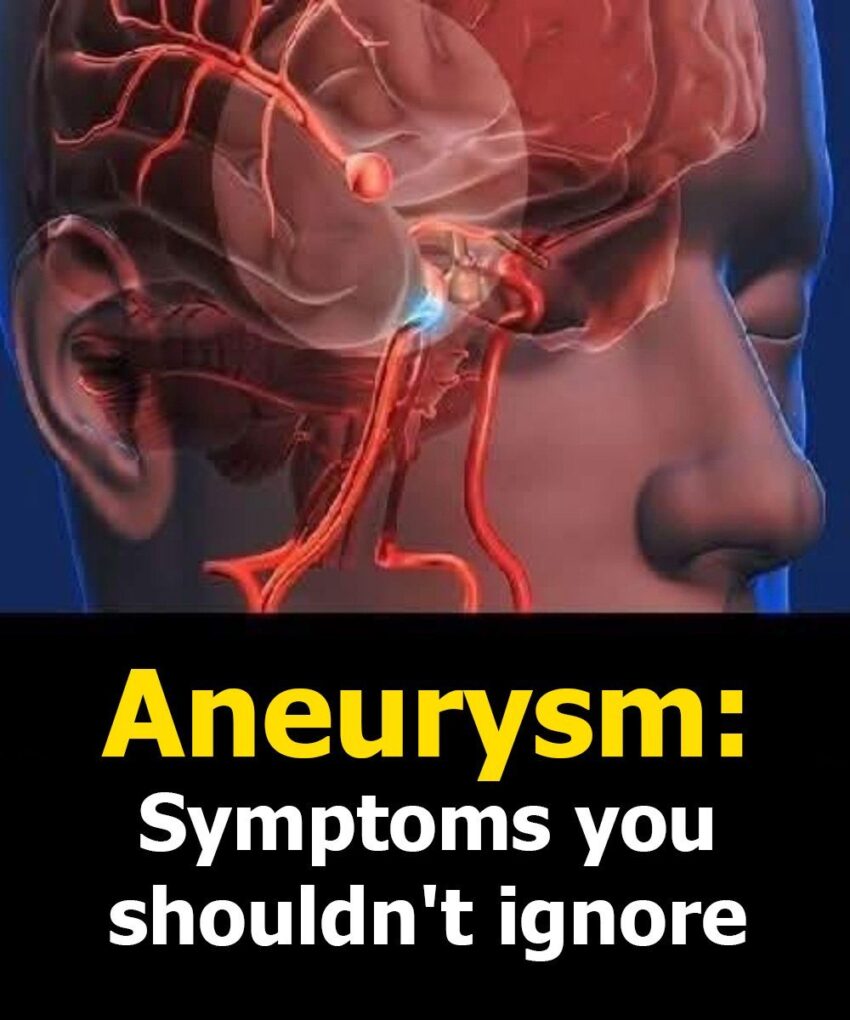
An aneurysm is a bulge or weakening in a blood vessel wall. The danger is that it can enlarge and rupture, which is a medical emergency.
Aneurysm symptoms are often silent until something serious happens, but there are warning signs you shouldn’t ignore—especially depending on where the aneurysm is (brain, aorta, etc.).
🚨 Possible warning signs of a brain aneurysm (or rupture)
If an aneurysm in the brain leaks or bursts, symptoms can come on suddenly:
- Sudden, severe headache (often described as “worst headache of life”)
- Blurred or double vision
- Drooping eyelid or dilated pupil
- Stiff neck
- Nausea or vomiting
- Loss of consciousness
- Seizure
- Confusion or trouble speaking
⚠️ Possible warning signs of an aortic aneurysm (chest/abdomen)
These can be subtle until they become dangerous:
- Deep, constant pain in chest, back, or abdomen
- Pulsing feeling near the navel (abdominal area)
- Shortness of breath (if in chest)
- Sudden severe tearing pain (possible rupture)
- Dizziness, fainting, or shock symptoms
⛔ When to treat it as an emergency
Seek immediate medical help if there is:
- Sudden, intense pain (head, chest, or abdomen)
- Fainting or collapse
- Sudden neurological changes (speech, vision, weakness)
- Signs of shock (cold skin, rapid heartbeat, confusion)
Important note
Many aneurysms don’t cause symptoms until they grow large or rupture, which is why they’re often found incidentally on scans.
If you want, I can also explain:
- what causes aneurysms,
- who is at higher risk,
- or how doctors detect them early.
