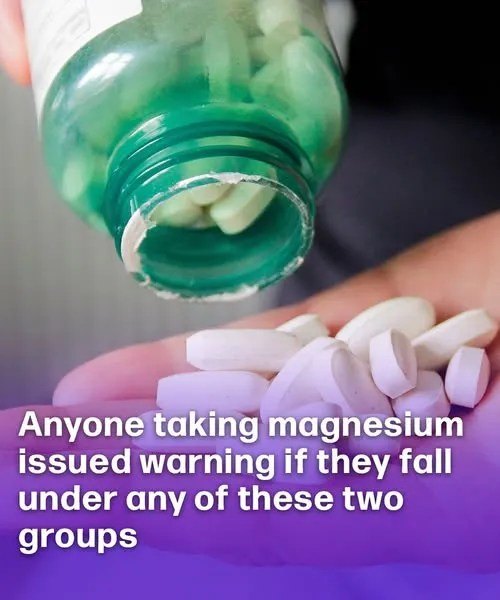
Here’s what’s behind the recent headlines about magnesium supplements—and why health experts are specifically warning two higher-risk groups.
Why the warning is coming now
Magnesium itself isn’t new or dangerous in normal amounts. In fact, it’s essential for muscle function, nerve signaling, heart rhythm, and energy production. The concern isn’t food-based magnesium—it’s high-dose supplements, which are increasingly popular for sleep, stress, and cramps.
Recent medical reviews and safety updates emphasize that while most healthy people tolerate magnesium well, supplement doses can quietly push levels too high or interfere with medications, especially when people self-prescribe without checking kidney function or drug interactions. (Office of Dietary Supplements)
🚨 The two high-risk groups flagged by experts
1) People with kidney disease (or reduced kidney function)
This is the most important warning.
Healthy kidneys remove excess magnesium through urine. But when kidney function is impaired:
- magnesium can build up in the blood
- even normal supplement doses may become unsafe
- severe cases can lead to irregular heartbeat, low blood pressure, breathing problems, or toxicity
Because early kidney disease is often silent, some people may not realize they’re in this risk group. Experts strongly advise that anyone with chronic kidney disease—or suspected decline in kidney function—should only take magnesium under medical supervision. (ScienceInsights)
2) People taking certain prescription medications
Magnesium can interact in two main ways: blocking drug absorption or altering mineral balance.
Key medication categories include:
- Antibiotics (tetracyclines, fluoroquinolones) → magnesium binds to them and reduces effectiveness
- Osteoporosis drugs (bisphosphonates) → absorption is reduced
- Diuretics (“water pills”) → some lower magnesium too much, others may increase it unpredictably
- Proton pump inhibitors (PPIs) → long-term use can affect magnesium levels
- Anesthesia-related muscle relaxants → magnesium can intensify their effects
Because of these interactions, timing and medical guidance matter more than most people realize. (Home Remedies Easy)
⚠️ What “too much magnesium” actually looks like
For most healthy adults, the main issue from supplements is:
- diarrhea
- nausea and cramping
But at very high intakes (especially in kidney disease):
- low blood pressure
- irregular heartbeat
- confusion or muscle weakness
- in extreme cases, cardiac arrest (Office of Dietary Supplements)
Bottom line
The “new warning” isn’t that magnesium is dangerous—it’s that:
- supplements are not risk-free
- kidney function and medications matter more than people assume
- and “more” is not better with magnesium
If you want, I can break down:
- safe daily magnesium doses (food vs supplements)
- signs you might already be taking too much
- or which magnesium forms are gentler (glycinate, citrate, oxide, etc.)
