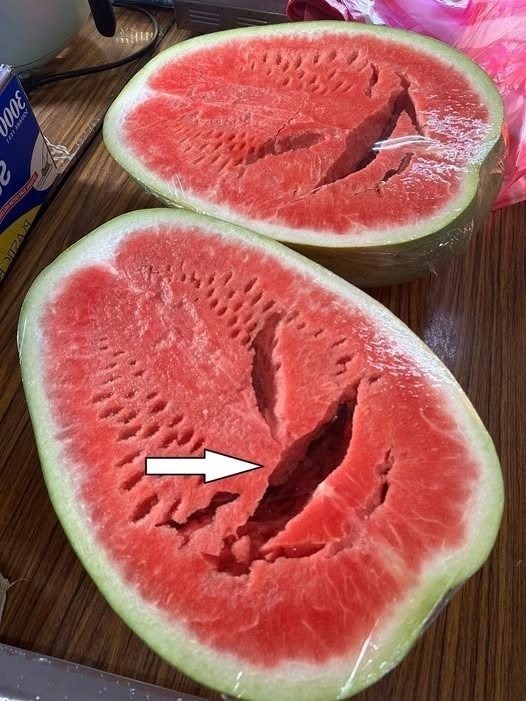
That warning is exaggerated.
If you cut open a watermelon and see internal cracks or a “cave-like” split inside, it usually does NOT mean it’s unsafe to eat. It’s a known horticultural issue called things like:
- “Internal cracking”
- “Hollow heart”
What actually causes those cracks?
Watermelons can split inside because of:
- Rapid growth (lots of water + heat + fertilizer swings)
- Temperature stress while growing
- Genetic variety differences
- Uneven watering in the field
Basically, the fruit grows faster than its internal structure can keep up, so it forms cracks or hollow spaces.
Is it dangerous?
In most cases: no.
The cracks themselves are not poison, not bacteria, and not a toxin.
When you SHOULD NOT eat it
Throw it away if you notice:
- Sour or fermented smell
- Slimy texture
- Mold (white, green, or black fuzzy patches)
- Off taste (alcohol-like or bitter fermentation)
- Gas bubbles or leaking liquid
Those signs indicate spoilage, not just natural cracking.
Bottom line
Cracks inside a watermelon usually mean growing stress, not contamination. It’s generally safe if it still smells and tastes normal.
If you want, you can describe or show what you saw and I can help you judge whether it looks like harmless cracking or actual spoilage.
