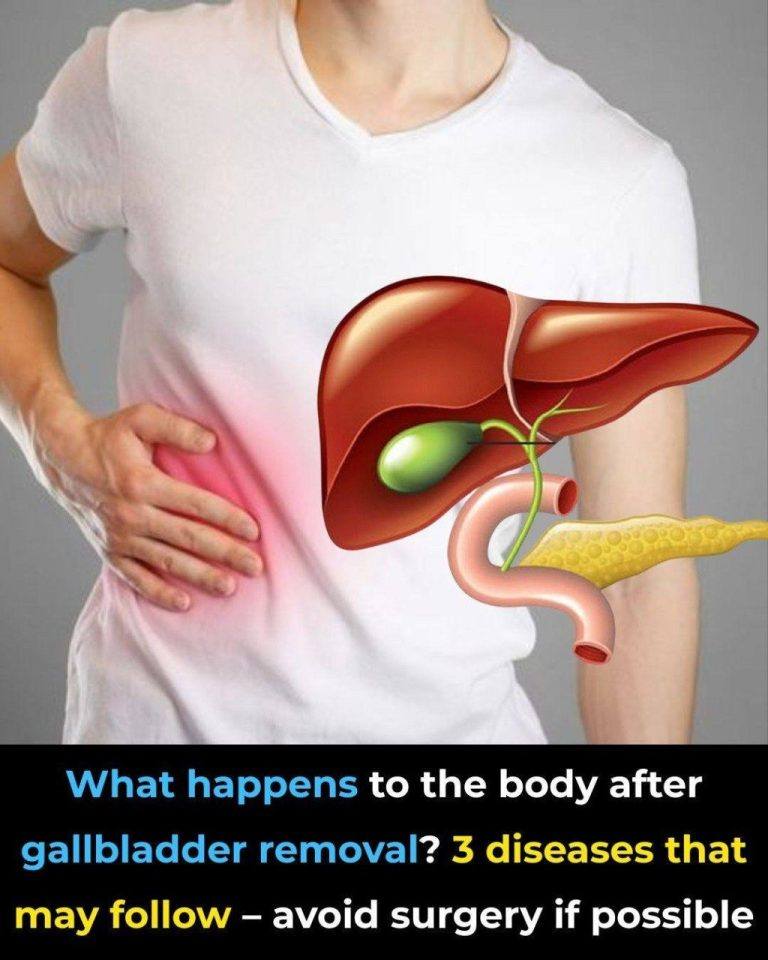
That headline is misleading. Gallbladder removal is not something doctors suggest to “avoid if possible” in a general sense—it’s often done when the benefits clearly outweigh the risks.The gallbladder stores bile, and when it causes serious problems (like repeated inflammation or gallstones blocking ducts), removal can be the safest option.The surgery is called a Cholecystectomy.
🧠 What actually happens after gallbladder removal
Most people live completely normal lives because:
- The liver still makes bile
- Bile just flows directly into the intestine instead of being stored
⚠️ Possible effects (not “diseases you will get”)
Some people may experience temporary or mild changes:
1. 💩 Digestive changes (looser stools or urgency)
- Happens because bile is less controlled
- Often improves over time
2. 🍽️ Difficulty with fatty meals (temporary)
- Large fatty meals may cause bloating or discomfort
- Body usually adapts
3. 💨 Bloating or gas
- Common in early recovery
- Usually settles within weeks to months
🚨 Rare long-term issues (not guaranteed)
In a small number of cases:
- Chronic diarrhea
- Bile reflux symptoms
- Nutrient absorption changes
These are manageable and not inevitable.
❗ What the headline gets wrong
- It suggests “3 diseases will follow” → not supported by medical evidence
- It implies surgery should be avoided → dangerous generalization
- It ignores that untreated gallbladder disease can be life-threatening
🧠 When surgery is actually needed
Doctors recommend cholecystectomy when there are:
- Recurrent gallstones
- Gallbladder inflammation (cholecystitis)
- Blocked bile ducts
- Severe pain or infection risk
Leaving these untreated can lead to serious complications.
✔️ The Bottom Line
Gallbladder removal is a common, generally safe procedure. Most people do not develop new diseases afterward. Instead, they avoid ongoing pain, infection, or emergency complications from gallbladder disease.
If you want, I can explain:
- What to eat after gallbladder removal
- Or how to manage digestion during recovery 👍
