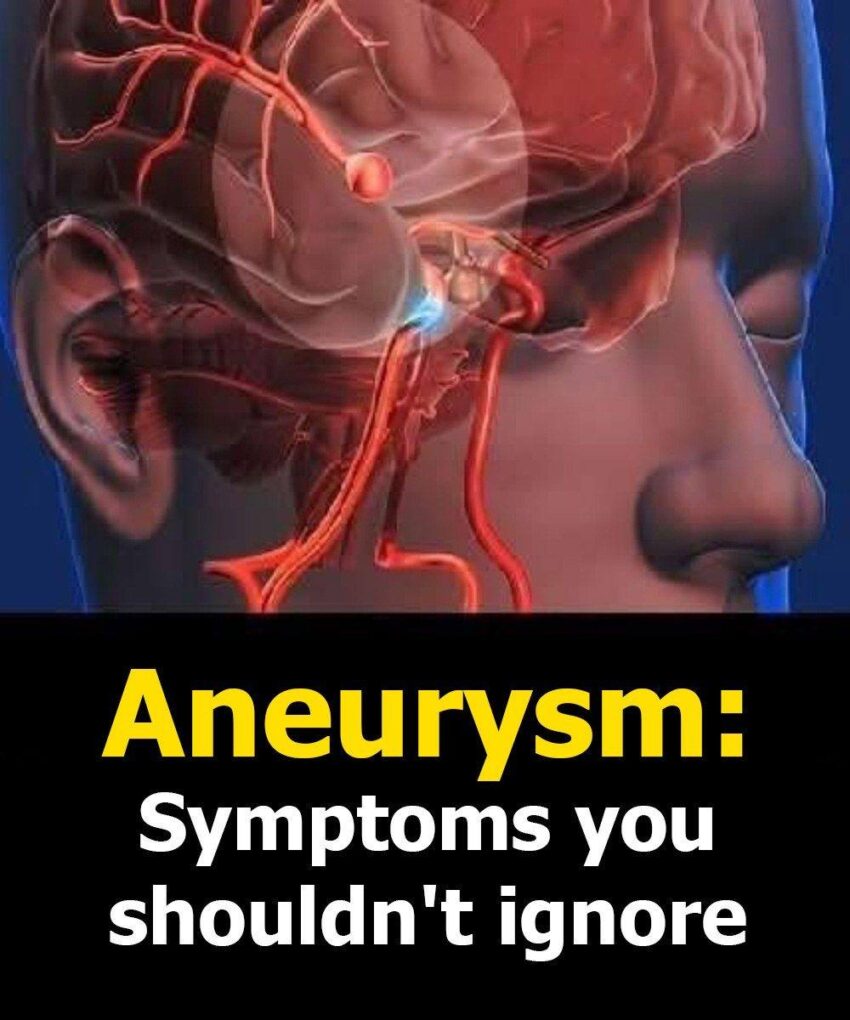
An aneurysm is a bulging or weakening in a blood vessel wall. Many aneurysms don’t cause symptoms until they become large or rupture, which is why people say “don’t ignore the signs”—but the reality is that warning signs depend on where it is in the body.
Possible warning signs (especially if it’s growing or leaking)
Brain (cerebral) aneurysm:
- Sudden, extremely severe headache (“worst headache of life”)
- Blurred or double vision
- Drooping eyelid
- Pain above or behind the eye
- Nausea or vomiting
- Neck stiffness
- Loss of consciousness or confusion (in severe cases)
Aorta (main artery) aneurysm:
- Deep, constant chest, back, or abdominal pain
- Pulsating feeling in the abdomen
- Shortness of breath (if chest area is involved)
If it ruptures (medical emergency)
- Sudden collapse or fainting
- Severe pain (head, chest, or abdomen depending on location)
- Rapid drop in blood pressure
- Shock symptoms
Important reality check
Many aneurysms have no symptoms at all until they become dangerous. That’s why they’re often discovered incidentally during scans.
If someone has sudden intense headache, collapse, or severe chest/back pain, it’s an emergency—needs immediate medical care.
If you want, I can explain what causes aneurysms or who is at higher risk.
