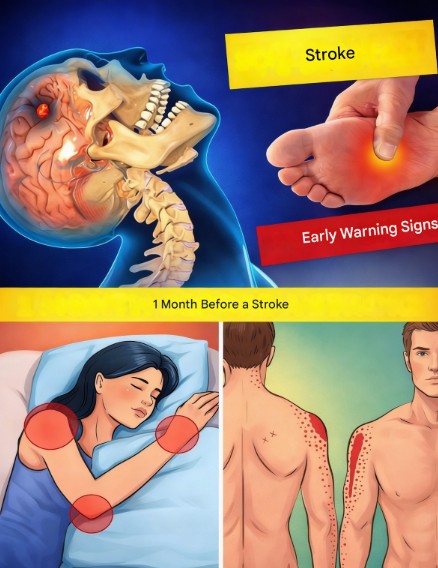
A stroke usually happens suddenly, but in some people there are early warning signs in the days to weeks before, most often due to a transient ischemic attack (TIA)—sometimes called a “mini-stroke.” A TIA is temporary, but it’s an important red flag that a full Stroke may be coming.
8 warning signs that may appear before a stroke (often weeks or days earlier)
These are especially concerning if they come on suddenly and then improve:
- Sudden weakness or numbness
Often on one side of the face, arm, or leg (even if it goes away after minutes or hours). - Brief speech problems
Slurred speech, difficulty forming sentences, or trouble understanding others. - Temporary vision changes
Blurred vision, double vision, or partial loss of vision in one or both eyes. - Sudden dizziness or loss of balance
Trouble walking straight, coordination issues, or unexplained falls. - Unexplained severe headache
Especially a sudden, intense headache unlike usual headaches. - Short episodes of confusion
Feeling disoriented, difficulty focusing, or trouble recognizing familiar people/places. - Tingling or “pins and needles” on one side
Especially if it spreads or comes and goes without a clear cause. - Brief episodes of facial drooping
One side of the face may feel weak or look uneven, even if it resolves.
👉 Important: These symptoms may last only a few minutes (TIA) but still signal high stroke risk in the following days or weeks.
9 tips to help prevent a stroke
- Control blood pressure
This is the single most important factor in prevention. - Manage diabetes and cholesterol
Keep blood sugar and lipids within recommended ranges. - Quit smoking completely
Smoking significantly damages blood vessels and increases clot risk. - Stay physically active
Aim for at least 30 minutes of moderate activity most days. - Eat a heart-healthy diet
Focus on vegetables, fruits, whole grains, lean proteins; reduce salt and trans fats. - Maintain a healthy weight
Especially around the abdomen, where excess fat increases risk. - Limit alcohol intake
Heavy drinking increases blood pressure and stroke risk. - Treat heart conditions properly
Especially atrial fibrillation or other rhythm disorders that can cause clots. - Don’t ignore warning symptoms
Even if they disappear, seek urgent medical evaluation immediately—this can prevent a major stroke.
Key takeaway
A stroke rarely gives a clear “one-month countdown,” but repeated brief neurological episodes (TIAs) in that period are a major warning sign. Treating them early can often prevent permanent brain damage.
If you want, I can also give you a simple FAST test checklist or explain how to tell stroke symptoms from something less serious like migraine or anxiety.
