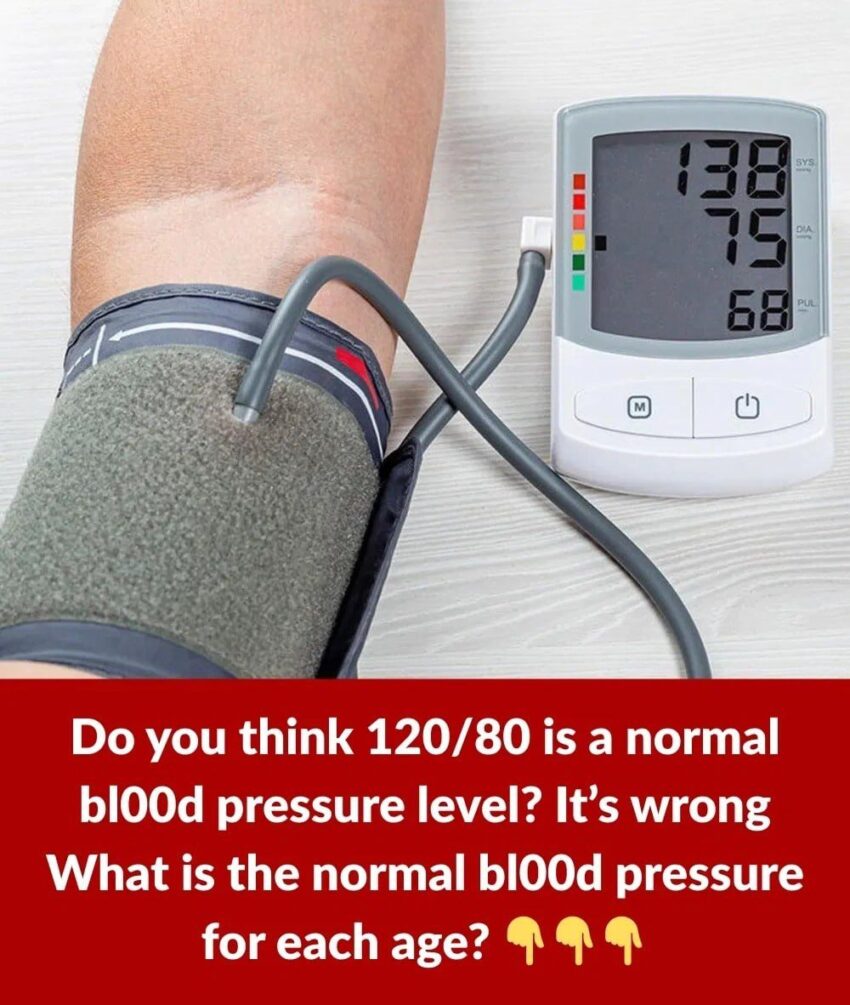
Blood pressure (BP) isn’t strictly “one normal number for each age,” but there are typical ranges doctors expect. In adults, guidelines are mostly the same regardless of age, while children and teens use age-based percentiles.
🧍 Adults (18+ years)
Normal blood pressure is generally:
- Normal: about <120 / <80 mmHg
- Elevated: 120–129 / <80
- High BP (Hypertension Stage 1): 130–139 / 80–89
- High BP (Stage 2): ≥140 / ≥90
👉 This applies to most adults, even older adults, though doctors may individualize targets for elderly people.
🧒 Children & teens (approximate ranges)
For younger people, “normal” depends on age, height, and sex, but typical averages are:
- Newborn (0–1 month): ~60–90 / 20–60
- Infant (1–12 months): ~80–100 / 50–65
- Toddler (1–2 years): ~90–105 / 55–70
- Child (3–5 years): ~95–110 / 60–75
- Child (6–12 years): ~100–120 / 60–80
- Teen (13–17 years): ~110–130 / 65–85
🧠 Important points
- Blood pressure naturally rises slightly with age due to stiffening arteries.
- A single reading doesn’t diagnose anything—doctors usually need multiple readings over time.
- Stress, caffeine, sleep, and activity can temporarily change BP.
⚠️ When to be concerned
- Consistently ≥140/90 in adults → high blood pressure
- Repeated readings <90/60 with symptoms (dizziness, fainting) → low blood pressure issue
- Sudden very high readings (like 180/120+) → urgent medical attention
If you want, tell me your age and recent BP reading, and I can help you interpret whether it’s normal or not.
