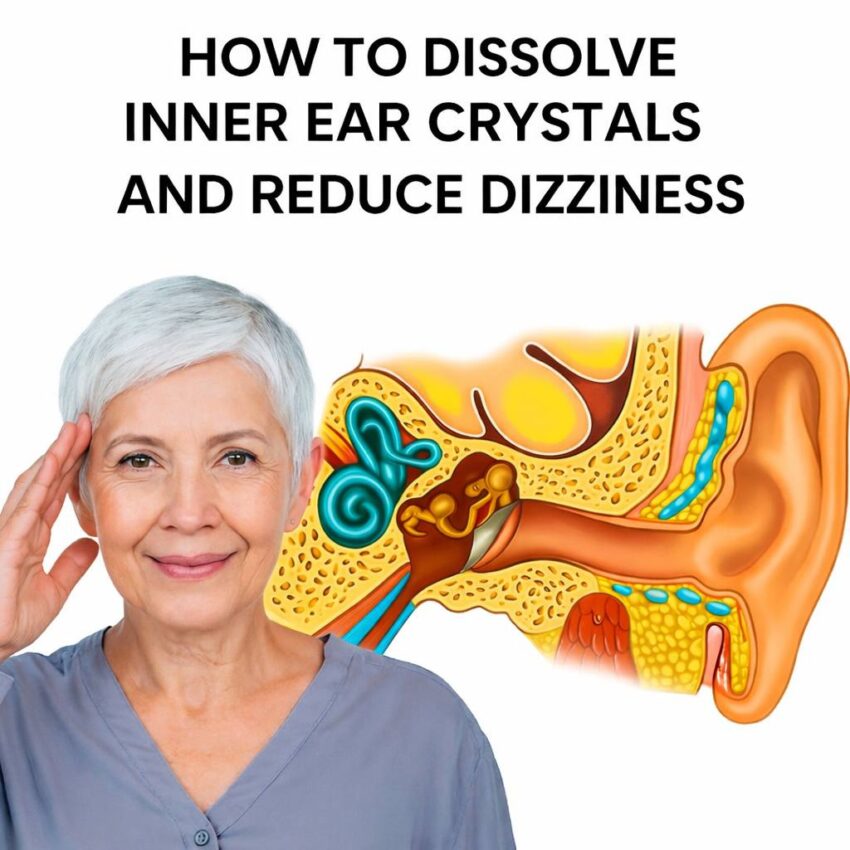
What people call “inner ear crystals” are tiny calcium particles involved in balance. When they move out of place, it can trigger a type of vertigo called Benign Paroxysmal Positional Vertigo (BPPV). The good news is that this condition is often very treatable.
How to reposition the crystals
The most effective approach is a series of head movements designed to guide the crystals back where they belong. The most common is the:
1. Epley Maneuver
This can be done by a doctor or at home (if you’ve been shown how). It involves:
- Turning your head to one side
- Lying back quickly with your head angled
- Rotating your head in stages
- Sitting back up
It may feel uncomfortable briefly, but it’s highly effective for many people after just a few tries.
2. Other repositioning exercises
Depending on which ear is affected, doctors might suggest:
- Semont maneuver
- Brandt-Daroff exercises (repeated movements done at home)
These help your brain adapt and/or move the crystals out of sensitive areas.
Things that help reduce vertigo symptoms
✔️ Move carefully
Avoid sudden head movements, especially when getting out of bed or looking up.
✔️ Sleep slightly elevated
Using an extra pillow can reduce symptoms overnight.
✔️ Stay hydrated
Dehydration can worsen dizziness.
✔️ Balance exercises
Simple vestibular rehab exercises can improve stability over time.
When medication is used
Doctors sometimes prescribe short-term relief medications like:
- Meclizine
- Dimenhydrinate
These don’t fix the crystals—they just reduce symptoms like nausea and dizziness.
When to see a doctor
Get medical help if:
- Vertigo lasts more than a few weeks
- You have hearing loss, ringing, or severe headaches
- You feel faint or have trouble walking
An ENT specialist or neurologist can confirm it’s BPPV and guide treatment.
Important note
Don’t try repeated maneuvers blindly if you’re unsure of the diagnosis—other conditions can mimic vertigo, and incorrect movements may make symptoms worse.
If you want, I can guide you step-by-step through the Epley maneuver safely based on which side is affected.
