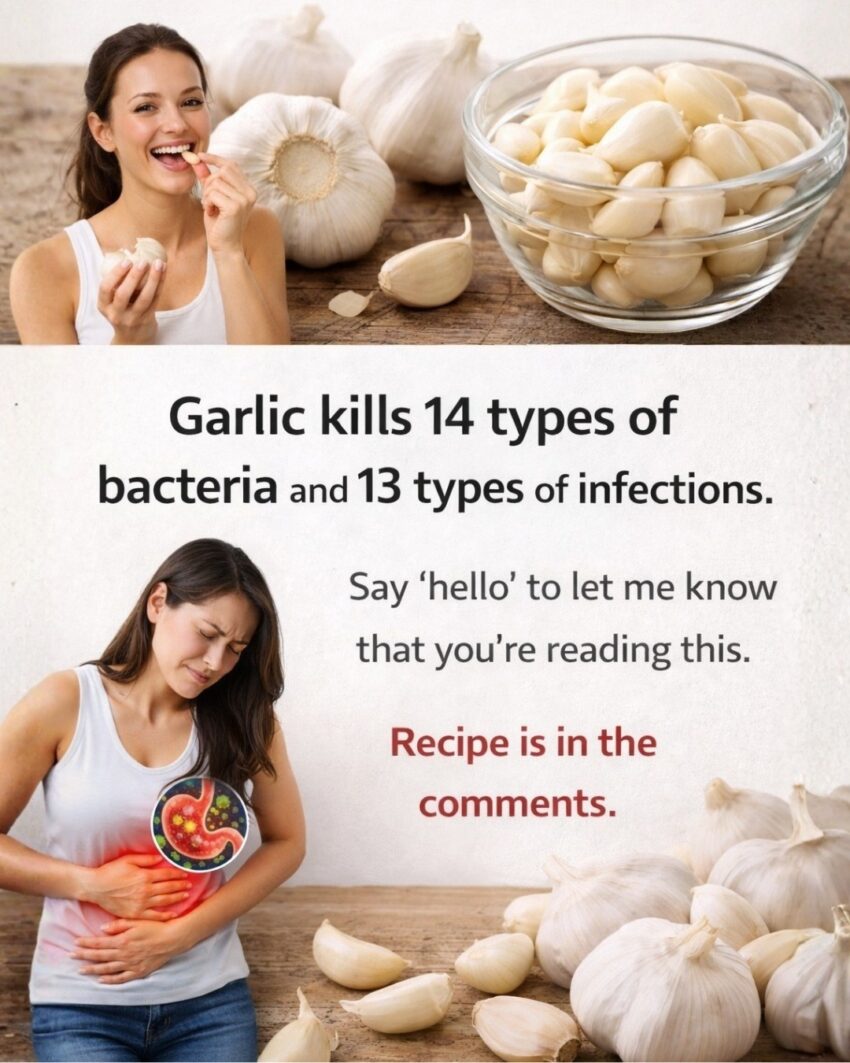
Calling garlic a “natural antibiotic that destroys infections” is an oversimplification that can be misleading.
garlic does contain compounds—especially allicin—that show antimicrobial activity in lab studies. These compounds can inhibit some bacteria, fungi, and viruses under controlled conditions. That’s where the reputation comes from.
But in real-world medicine:
What garlic can do
- Has mild antimicrobial effects in laboratory settings
- May slightly support immune function in some studies
- Can contribute to overall health as part of a balanced diet
What garlic cannot do
- It is not an antibiotic in the medical sense
- It cannot reliably “destroy infections” inside the human body
- It does not replace treatments for bacterial infections like pneumonia, strep throat, UTIs, etc.
Why the claim is exaggerated
- Lab results use concentrated extracts far stronger than normal dietary garlic
- Human digestion breaks down or reduces active compounds
- Infections in the body require targeted dosing, absorption, and consistent blood levels—things garlic doesn’t provide
Bottom line
Garlic is a healthy food with some antimicrobial properties, but it should be seen as supportive nutrition—not a substitute for antibiotics or medical treatment when an infection is present.
If you want, I can break down which infections garlic has actually been studied for, and where the evidence is strongest vs weakest.
