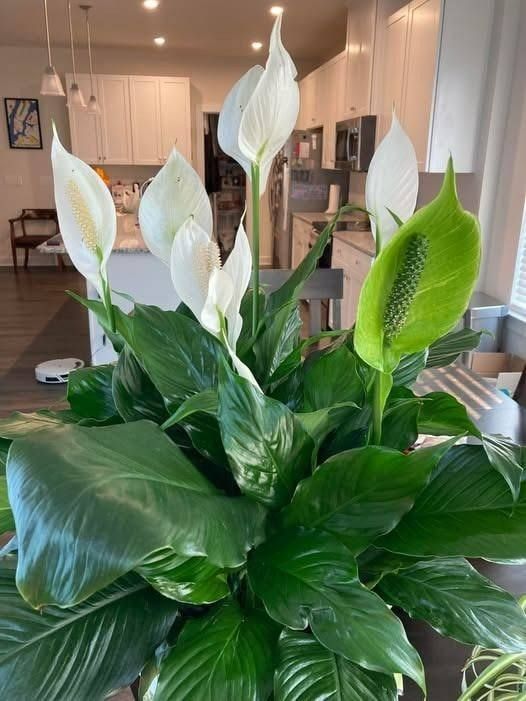
The Peace Lily is a popular indoor plant known for its elegant white flowers and glossy green leaves. Its scientific name is Spathiphyllum.
🌿 Overview
Peace lilies are tropical plants native to Central and South America. Despite the name “lily,” they are not true lilies. They’re widely grown as houseplants because they tolerate low light and help improve indoor air quality.
🌸 Appearance
- Dark green, elongated leaves
- White “flowers” (actually a special leaf called a spathe)
- Grows in a clumping form
- Can reach 30 cm to over 1 meter indoors depending on variety
☀️ Light Requirements
- Prefers low to medium indirect light
- Can survive in low light but may produce fewer flowers
- Avoid direct sunlight (it scorches leaves)
💧 Watering
- Likes slightly moist soil
- Water when the top 2–3 cm of soil feels dry
- Drooping leaves often mean it needs water
- Overwatering can cause root rot
🌡️ Temperature & Humidity
- Ideal temperature: 18°C to 27°C
- Doesn’t tolerate cold drafts or frost
- Enjoys moderate to high humidity
🌱 Soil & Fertilizer
- Well-draining potting mix (peat-based or aroid mix works well)
- Feed lightly every 4–6 weeks in spring and summer
- Avoid over-fertilizing (can damage roots)
🌼 Flowering
- Produces white blooms mainly in spring and early summer
- Flowers can last several weeks to months
- Needs good indirect light to bloom regularly
🧼 Care Tips
- Wipe leaves occasionally to remove dust
- Remove yellow or dead leaves
- Repot every 1–2 years if root-bound
⚠️ Toxicity
- Mildly toxic to pets and humans if eaten
- Can cause mouth irritation, drooling, or stomach upset in cats and dogs
🌿 Benefits
- Helps improve indoor air quality (removes some toxins)
- Very decorative and calming plant for homes and offices
If you want, I can also tell you how to fix yellow leaves, how to make it bloom more, or how to propagate it easily.
