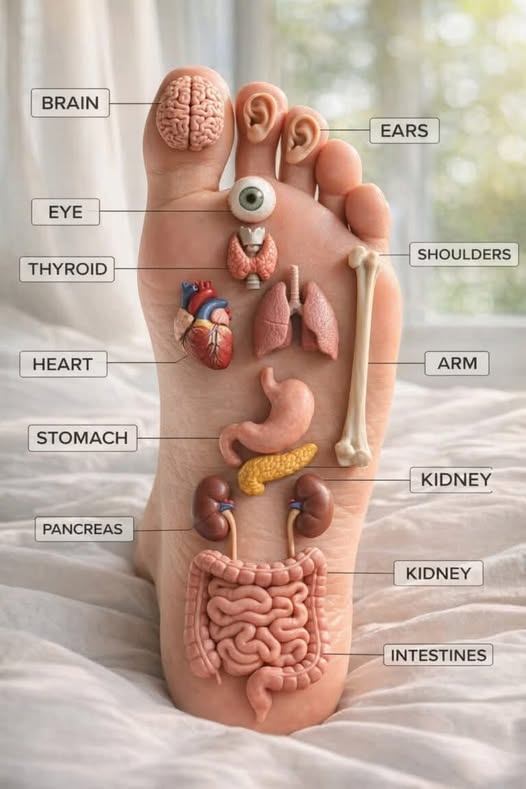
🦶 Why people believe it “works wonders”
1. Thick skin = slower absorption
The soles of your feet have thicker skin, so oils are absorbed more slowly, not more effectively. That alone weakens the “miracle delivery system” idea.
2. Placebo effect
If someone expects relaxation or pain relief, they may genuinely feel better due to the placebo effect. This is powerful—but not the same as a physiological cure.
3. Relaxation, not treatment
Some oils (like lavender or peppermint) may:
- Smell calming
- Slightly relax muscles
- Improve sleep quality for some people
But this is mostly through aromatherapy and sensory effects, not absorption through the feet.
⚠️ What it does NOT do
There is no evidence that foot application:
- Detoxifies organs
- Cures infections or chronic disease
- Treats arthritis or nerve damage
- Targets specific organs through “reflex zones”
The idea of foot “reflex pathways” is part of reflexology, which is not supported by strong clinical evidence.
🧴 Possible risks
Essential oils are highly concentrated and can cause:
- Skin irritation or burns (especially undiluted)
- Allergic reactions
- Sensitivity over time
They should always be diluted with a carrier oil.
🧠 Bottom line
Rubbing essential oils on the feet can feel relaxing and smell pleasant—but the “works wonders for the whole body” claim is not scientifically supported. Any benefits are usually mild, sensory, or placebo-based.
If you want, I can show you which essential oils actually have evidence for specific uses (sleep, headaches, muscle soreness) and which claims are just hype.
