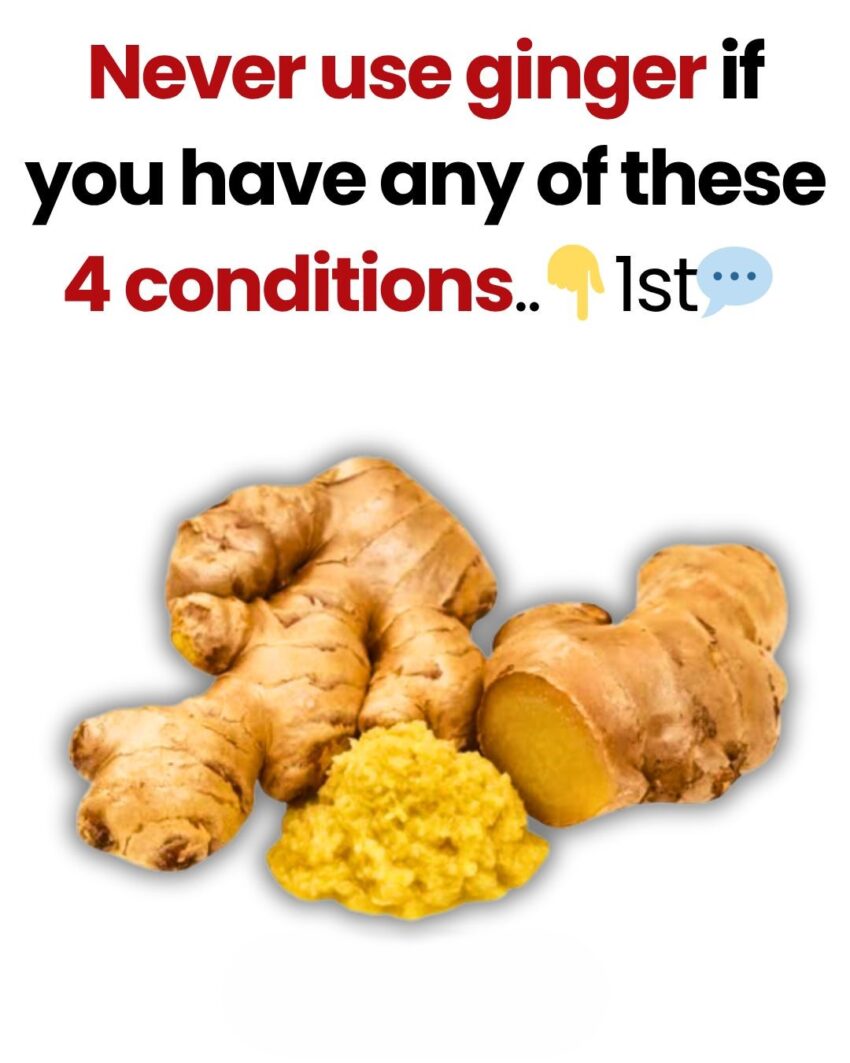
That headline is exaggerated. Ginger is generally safe for most people and is widely used in food and traditional remedies. The idea that you should “never use ginger” in certain conditions is misleading.
What is true is that ginger can interact with some health conditions or medications, so caution matters—not total avoidance in most cases.
Here are situations where you should be careful with ginger:
1. If you take blood-thinning medications
Ginger may slightly slow blood clotting. If you’re on medicines like warfarin, aspirin, or clopidogrel, high doses of ginger could increase bleeding risk.
2. Before surgery
Because of the same mild blood-thinning effect, doctors often advise stopping high-dose ginger supplements 1–2 weeks before surgery.
3. If you have gallstones
Ginger can stimulate bile production, which may worsen symptoms in some gallbladder conditions.
4. If you have bleeding disorders
People with conditions like hemophilia or low platelet counts should avoid large medicinal doses unless advised by a doctor.
5. If you are on diabetes medication
Ginger may slightly lower blood sugar. Combined with medication, it could sometimes lead to hypoglycemia if not monitored.
6. If you have severe acid reflux (GERD)
Small amounts are usually fine, but in some people, ginger can worsen heartburn.
Important reality check
- Normal dietary use (tea, cooking, small amounts) is safe for most people.
- Problems usually come from high-dose supplements, not food.
- There is no medical guideline that says “never use ginger” for the general public.
If you want, tell me what condition or concern you saw mentioned—I can break down whether it’s actually supported by evidence or just internet fear-mongering.
