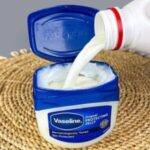
That “just pour milk into Vaseline and replace store products” claim is one of those viral DIY hacks that sounds clever but doesn’t really hold up in practice—and can actually be a bit problematic for your skin.
Why this isn’t a good idea
Vaseline (petroleum jelly) is an occlusive, meaning it forms a barrier on the skin to lock in moisture. It doesn’t mix with water-based ingredients like milk.
Milk, on the other hand, contains:
- water
- fats
- proteins
- natural sugars (like lactose)
- enzymes
When you mix them together:
- They don’t properly blend (you’ll get separation or a spoiled mixture)
- Milk is perishable, so it can quickly grow bacteria at room temperature
- There’s no preservative system, unlike skincare products made in controlled conditions
Potential risks
- Skin irritation from spoiled dairy
- Breakouts (especially if you’re acne-prone)
- Contamination because DIY mixes aren’t sterile or stable
- No predictable results—so it’s basically guesswork on your skin
What people think it does
This trend usually claims:
- “deep hydration”
- “glowing skin”
- “natural moisturizer”
But in reality, petroleum jelly already does the moisturizing job (by sealing moisture in), and milk doesn’t meaningfully improve that in a stable or safe way.
Better, safer alternatives
If your goal is soft or glowing skin, you’ll get far more reliable results from:
- Petroleum jelly alone (on damp skin)
- A simple fragrance-free moisturizer (with glycerin or ceramides)
- Lactic acid lotions (these contain controlled milk-derived acids, safely formulated)
- Gentle exfoliation products made for skin use
Bottom line
This is one of those DIY hacks that spreads because it sounds “natural and cheap,” but skincare chemistry doesn’t really work that way. Mixing kitchen ingredients with occlusive products doesn’t automatically create a safe or effective moisturizer.
If you want, tell me your skin type (dry, oily, acne-prone, etc.), and I can suggest a simple routine that actually works without expensive products.
