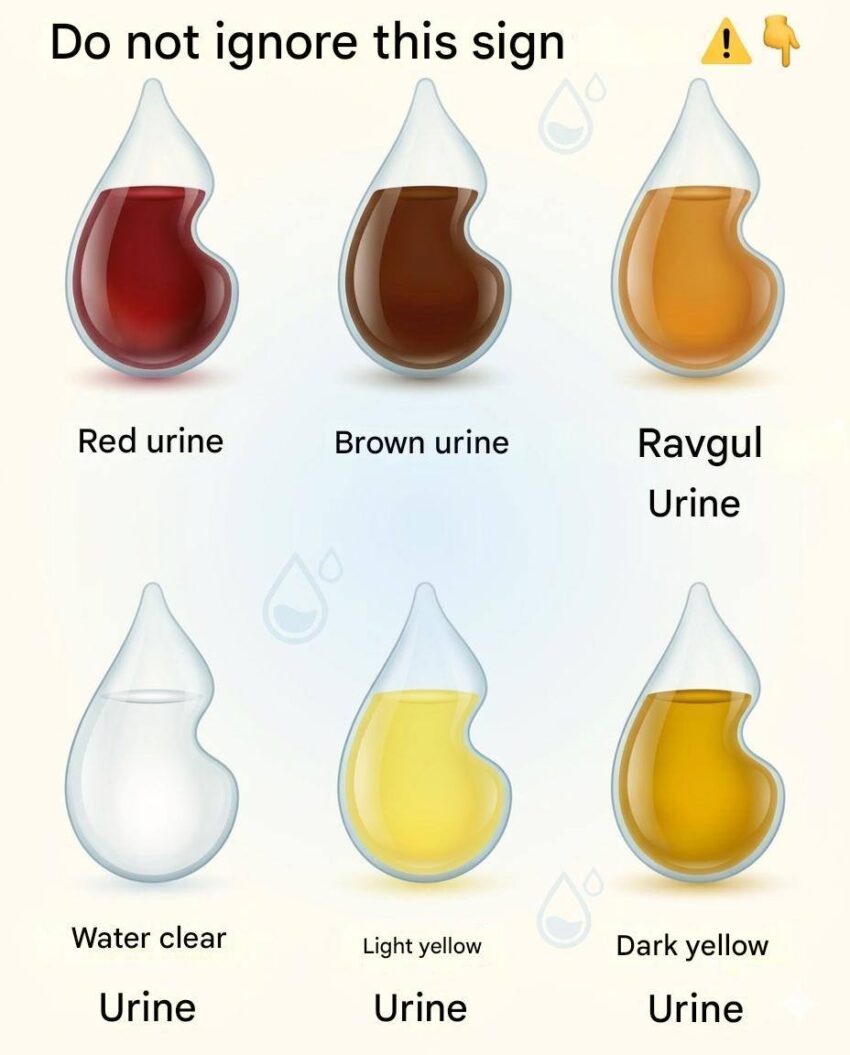
The color of your urine can give useful clues about your hydration level and sometimes your health, but it’s not a diagnosis on its own.
Here’s a clear guide to what different urine colors may mean:
💧 🟡 1. Pale yellow (straw color) — ✅ NORMAL
This is ideal.
- You are well hydrated
- Kidneys are working normally
- No major concern
💛 2. Dark yellow
Most common sign of:
- Mild dehydration
- Not drinking enough water
👉 Usually improves after drinking fluids.
🟠 3. Amber or honey-colored
More concentrated urine:
- Dehydration
- Possible heat exposure or sweating
👉 If persistent, increase fluid intake.
🧡 4. Orange urine
Possible causes:
- Severe dehydration
- Certain medications or vitamins (especially B-complex)
- Rarely, liver or bile issues
⚠️ If combined with yellowing eyes/skin, it may need medical attention.
🍷 5. Pink or red urine
This can look alarming.
Possible causes:
- Beets, berries, or food dyes
- Urinary tract infection
- Kidney stones
- Blood in urine
⚠️ If not food-related, it should be checked promptly.
Related conditions may include:
- Urinary tract infection
- Kidney stone disease
🟢 6. Green or blue urine (rare)
Often due to:
- Certain medications
- Food coloring
- Rare bacterial infections
⚪ 7. Cloudy urine
May suggest:
- Dehydration
- Infection
- High phosphate levels
🟤 8. Brown or cola-colored urine
Possible serious causes:
- Severe dehydration
- Liver problems
- Muscle breakdown
Can be linked to conditions like:
- Hepatitis (liver inflammation)
⚠️ Needs medical evaluation if persistent.
🚨 When to worry
See a doctor if you notice:
- Blood (pink/red) not from food
- Brown/tea-colored urine
- Pain, burning, or fever
- Persistent abnormal color for more than 1–2 days
🧠 Simple rule to remember
- 💛 Light yellow = healthy
- 🟡 Dark yellow = drink more water
- 🚩 Red, brown, or persistent abnormal colors = get checked
If you want, tell me what color you’re seeing and any symptoms—you can often narrow it down very quickly.
