Gallbladder removal (cholecystectomy) is a very common surgery, and for many people it solves a painful or dangerous problem (usually gallstones). But the body does change afterward, because bile flow is no longer regulated the same way.
Let’s go in depth—what actually happens, what problems may follow, and whether “avoiding surgery” is really the right approach.
🧠 1. What the Gallbladder Normally Does
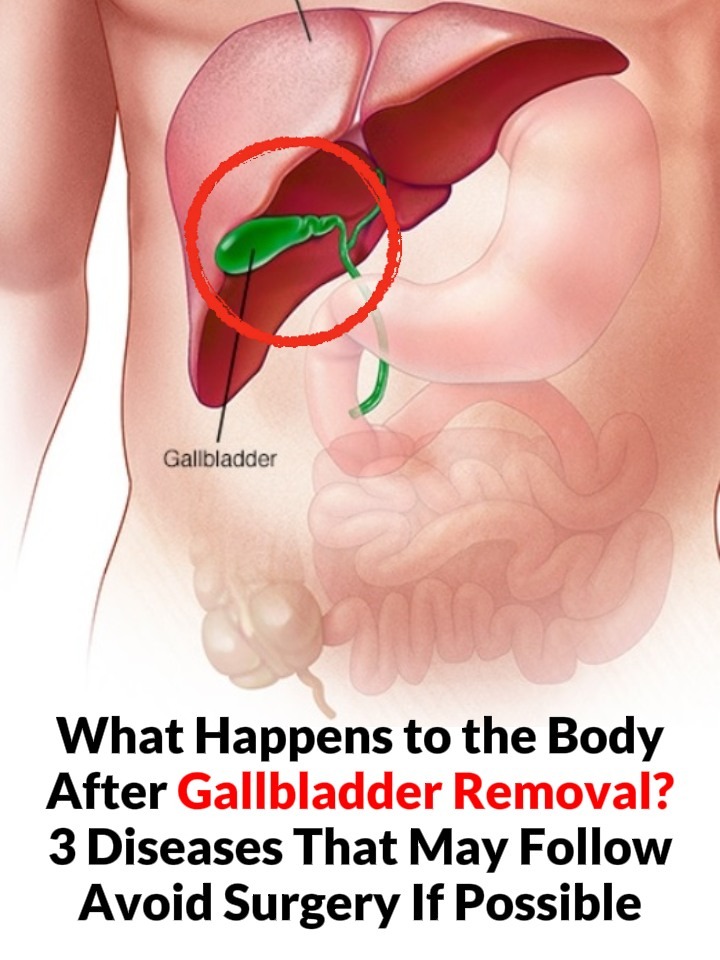
Gallbladder is a small storage organ under the liver. Its job is not to produce bile, but to:
- Store bile made by the liver
- Concentrate it
- Release a strong burst of bile when you eat fatty food
Bile helps digest fats and absorb fat-soluble vitamins (A, D, E, K).
When it is removed:
- The liver still produces bile
- But bile flows continuously into the intestine (not in controlled bursts)
🔄 2. What Changes After Removal
After surgery, digestion adapts:
✔ Normal adaptation (most people)
- Body adjusts within weeks to months
- No major long-term issues
- Normal diet is eventually tolerated
⚠ Possible changes in some people
- Loose stools after fatty meals
- Gas or bloating
- Sensitivity to greasy food
- Mild digestive irregularity
Most people still live completely normal lives.
⚠️ 3 “Diseases/Conditions” That MAY Follow
These are not guaranteed diseases, but recognized post-surgery complications.
1. 💩 Bile Acid Diarrhea (Chronic Diarrhea)
Bile acid diarrhea


What happens:
Without a gallbladder, bile flows constantly into the intestine. In some people:
- Excess bile reaches the colon
- It irritates the bowel lining
- Water is pulled into the stool
Symptoms:
- Frequent loose stools
- Urgency after eating
- Worsening after fatty meals
Important:
- Happens in a minority of patients
- Often treatable with diet or medications that bind bile
2. 🌪 Postcholecystectomy Syndrome
Postcholecystectomy syndrome


What it means:
A group of symptoms that continue or appear after gallbladder removal.
Possible causes:
- Bile duct irritation or spasm
- Remaining small stones in ducts
- Digestive sensitivity changes
Symptoms:
- Right upper abdominal pain
- Nausea
- Indigestion
- Bloating
Reality:
- Not one single disease, but a symptom cluster
- Often manageable, sometimes temporary
3. 🍽 Fat Malabsorption & Digestive Sensitivity
Fat digestion


What happens:
Bile is less concentrated, so fat digestion becomes less efficient.
Symptoms:
- Bloating after oily foods
- Greasy or floating stools (rare in severe cases)
- Mild nausea after heavy meals
Long-term concern:
- Some people develop ongoing sensitivity to fried foods
- Vitamin absorption issues are rare but possible if diet is poor
⚖️ 4. The “Avoid Surgery If Possible” Idea — Reality Check
This statement is partly misleading.
✔ True in one sense:
If symptoms are mild, doctors may try:
- Low-fat diet
- Weight control
- Monitoring stones
❌ Not true in dangerous cases:
If you have:
- Repeated gallbladder attacks
- Infection (cholecystitis)
- Blocked bile duct
- Pancreatitis
👉 Surgery is often the safest option
Because untreated gallstones can cause:
- Severe infection
- Pancreatic inflammation
- Emergency hospitalization
🧩 5. Who Usually Does Well After Surgery?
Most people:
- Recover fully within weeks
- Eat normal food again
- Have no long-term complications
Risk of long-term problems is relatively low.
🧾 Bottom Line
- The body adapts to life without a gallbladder
- A small group develops digestive issues like diarrhea or bloating
- “3 diseases” is an oversimplification—these are possible conditions, not guaranteed outcomes
- Surgery is not something to avoid blindly; it is often done to prevent serious complications
If you want, tell me:
- Your symptoms (pain, bloating, ultrasound result, etc.)
I can help you understand whether surgery is truly necessary in your situation or if conservative treatment is realistic.
