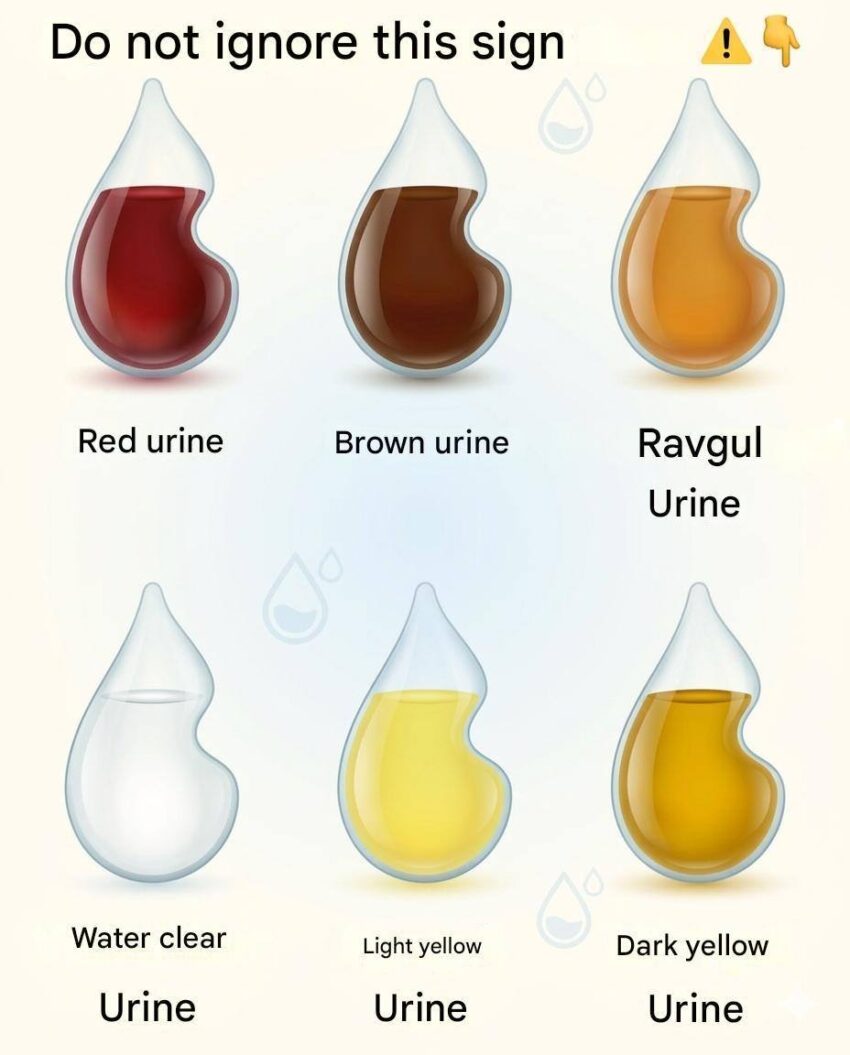
Urine color can give useful (but not definitive) clues about your hydration and sometimes your overall health. It’s influenced mainly by how concentrated your urine is and certain foods, medications, or medical conditions.
Here’s a practical guide:
1. Clear
- Usually means you’re very well hydrated.
- If it’s constantly clear, you might be drinking more water than your body needs.
2. Pale yellow (straw color)
- This is generally considered normal and healthy.
- It suggests good hydration balance.
3. Dark yellow / amber
- Most common sign of dehydration.
- Your body is conserving water, making urine more concentrated.
4. Honey or light brown
- Can indicate significant dehydration.
- If it persists after drinking fluids, it may suggest liver issues or bile-related problems.
5. Orange
- Often caused by dehydration or certain medications (like some antibiotics or vitamin B supplements).
- If it doesn’t improve with hydration, it can sometimes point to liver or bile duct problems.
6. Pink or red
- Can be harmless (beets, berries, food dyes).
- But it may also indicate blood in urine, which can come from urinary tract infections, kidney stones, or other conditions that need medical attention.
7. Blue or green (rare)
- Usually from food dyes or medications.
- Occasionally linked to rare infections or metabolic conditions.
8. Cloudy or murky
- May suggest urinary tract infection (UTI), especially if combined with burning or strong odor.
- Can also result from dehydration or certain minerals.
Important notes
- Urine color alone doesn’t diagnose disease—it’s just a clue.
- Things like vitamins (especially B-complex), foods (asparagus, beets), and medications can change color harmlessly.
- Hydration status is the most common factor.
When to pay attention
You should consider seeing a healthcare provider if you notice:
- Blood or red urine without a clear food cause
- Persistent dark brown or orange urine despite good hydration
- Cloudy urine with pain, fever, or burning
- Sudden unexplained changes that last more than a couple of days
If you want, I can also explain what urine odor, frequency, or foaminess can indicate—those also give useful health clues.
