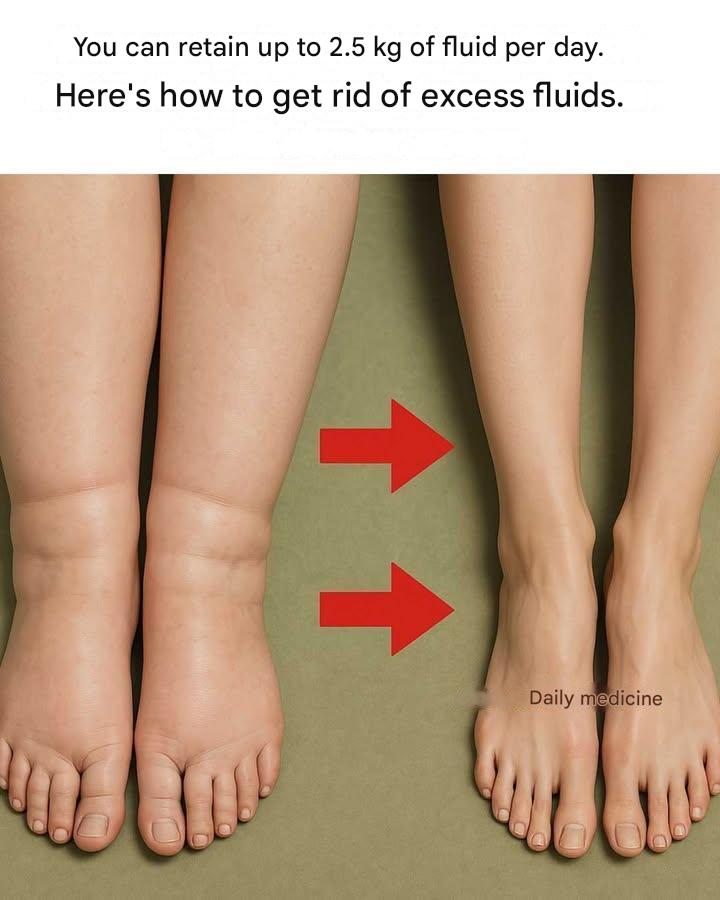
That “2.5 kg of fluid per day” claim is misleading in how it’s framed.
Your body does constantly shift water (you can temporarily gain or lose 0.5–2+ kg in a day depending on salt, carbs, hormones, heat, and activity), but that isn’t “stuck excess fluid” in a simple removable sense—it’s dynamic fluid balance.
If you’re feeling bloated or puffy, it’s usually from normal, reversible water retention rather than something to aggressively “flush out.” Safer, effective ways to reduce that include:
1) Reduce sodium (salt) for 24–48 hours
Most short-term water retention is sodium-related. Processed foods, restaurant meals, chips, sauces, and pickles are common sources.
2) Stay normally hydrated
Ironically, drinking enough water helps your body stop “holding on” to fluid. Dehydration can increase retention.
3) Move your body
Walking, light cardio, and stretching help circulation and reduce fluid pooling (especially in legs).
4) Balance carbs, don’t eliminate them
Carbs store water with glycogen. Big swings in carb intake cause noticeable weight changes. Keep intake consistent rather than extreme cuts.
5) Get potassium-rich foods
Bananas, yogurt, lentils, spinach, and potatoes can help counter sodium’s effect.
6) Sleep and stress control
Poor sleep and high cortisol can increase water retention.
Avoid “quick fixes”
Diuretics, extreme detoxes, or dehydration tricks can backfire and are not a healthy way to manage normal fluid shifts.
If swelling is persistent, painful, one-sided, or sudden (especially in legs, face, or abdomen), that’s no longer “normal water weight” and should be checked medically.
If you want, tell me what’s making you think you’re retaining fluid (bloating, weight fluctuation, swelling, etc.), and I can help narrow down the likely cause.
