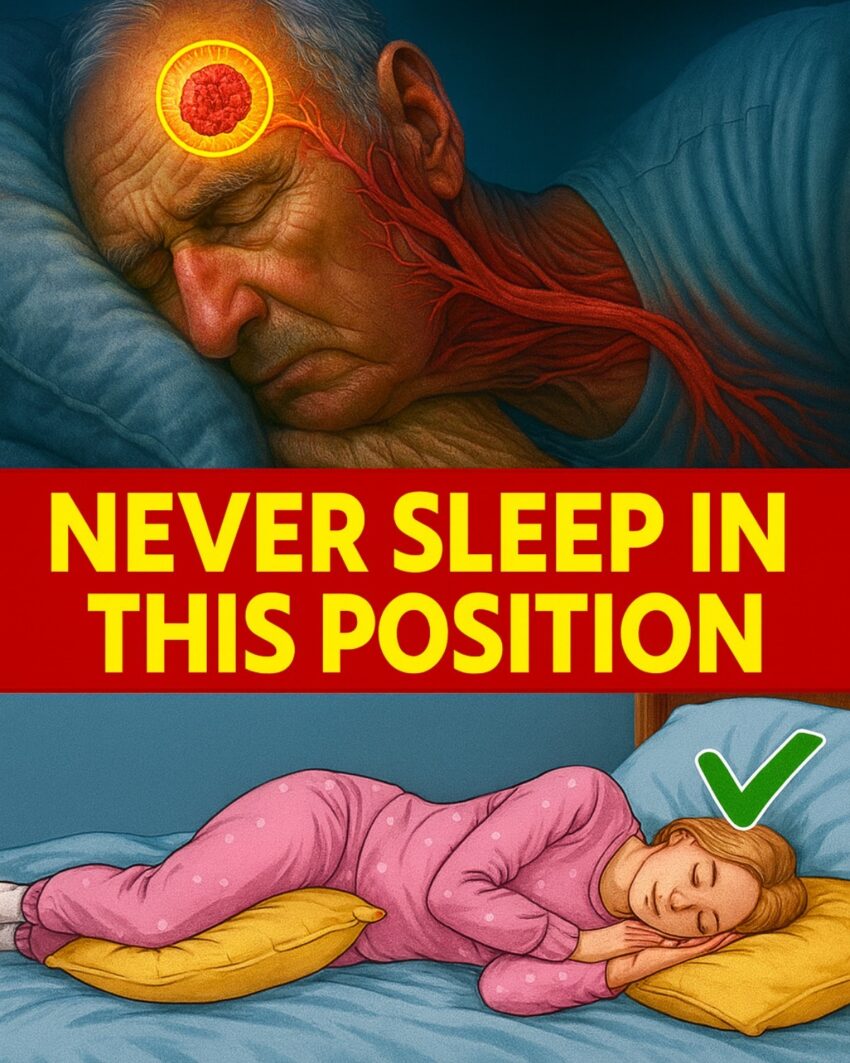
The headline you saw (“This sleeping position raises stroke risk”) is based on a real concern—but often oversimplified online.
Here’s what the evidence actually says:
🛌 Sleep position alone is NOT a direct stroke trigger
Medical research does not show that a single sleeping position (like left side, right side, or stomach) directly causes strokes in healthy people.
So claims like “this position will cause a stroke overnight” are not medically proven and are often exaggerated in viral videos.
⚠️ What does matter for stroke risk during sleep
Doctors focus on conditions that are strongly linked to stroke risk:
1. Sleep apnea (biggest link)
- People who sleep on their back often have worse obstructive sleep apnea
- Sleep apnea reduces oxygen levels and raises blood pressure
- It is a well-established stroke risk factor (www.heart.org)
👉 In this case, position matters indirectly because it worsens breathing problems.
2. Poor circulation in vulnerable patients
In rare cases (like severe heart disease or vascular issues), certain positions may worsen breathing or blood flow—but this is medical-condition specific, not general.
3. Irregular sleep patterns (stronger evidence than position)
- Irregular sleep timing is linked with higher risk of stroke and heart disease (The Guardian)
🧠 Why these “sleep position = stroke” claims go viral
Some videos confuse:
- blood flow changes during sleep
- neck position pressure
- sleep apnea risks
…and turn them into dramatic claims like “this position causes stroke overnight.”
That’s not supported by clinical evidence.
✔️ What seniors should actually do
If stroke prevention is the concern, doctors recommend:
- Treating sleep apnea (very important)
- Sleeping in a comfortable position that keeps breathing easy
- Keeping blood pressure, diabetes, and cholesterol controlled
- Maintaining a regular sleep schedule
Bottom line
No normal sleeping position has been proven to directly “cause strokes.”
But sleep quality and breathing disorders (especially sleep apnea) do matter a lot more than position alone.
If you want, tell me the exact position mentioned in that article/video (back, left side, stomach, etc.), and I can break down what science specifically says about it.
