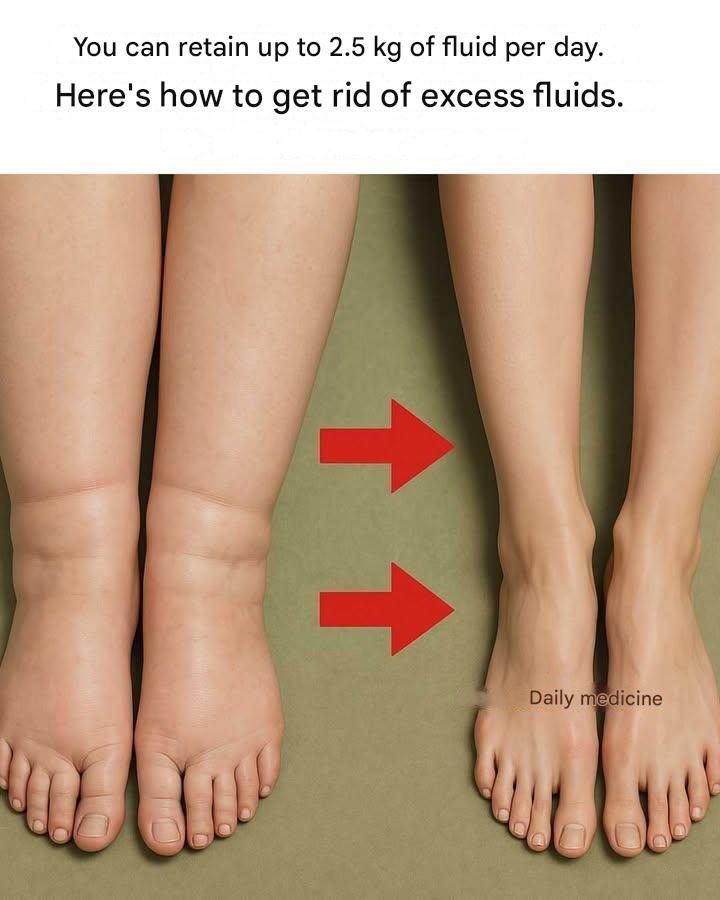
That claim is overstated. Your body doesn’t typically “hold 2.5 kg of fluid per day” in a way that needs fixing. Day-to-day weight can fluctuate from water, but large or persistent swelling is a symptom, not something to chase with quick fixes.Here’s what’s actually going on—and what helps.
💧 Why fluid retention happens
The medical term is edema. Common, non-serious triggers include:
- High salt intake
- Long periods of sitting/standing
- Hormonal changes (e.g., around menstruation)
- Heat
- Some medications (notably Amlodipine)
Medical causes can include:
- Heart failure
- Kidney disease
- Chronic venous insufficiency
✅ Practical ways to reduce mild fluid retention
🧂 Cut back on sodium
- Aim for less processed food
- This is one of the most effective steps
🚶♀️ Move regularly
- Walking activates calf muscles → helps push fluid back up
- Avoid sitting or standing still for long stretches
🦵 Elevate your legs
- Raise them above heart level when resting
- Helps reduce ankle/foot swelling
💧 Stay hydrated
- Paradoxically, not drinking enough can worsen retention
- Your body holds onto fluid when dehydrated
👟 Wear supportive footwear or compression (if advised)
- Can improve circulation in the legs
⚖️ Maintain a healthy weight
- Reduces pressure on veins and joints
⚠️ What to be cautious about
- “Detox teas” or quick diuretics → mostly temporary water loss
- Overusing diuretics without guidance can be harmful
- Extreme fluid restriction is not helpful
🚨 When to seek medical advice
Get checked if you notice:
- Sudden or severe swelling
- Swelling in one leg only
- Shortness of breath
- Rapid weight gain over a few days
- Swelling that doesn’t improve
🧠 Bottom line
- Small fluid shifts are normal; huge daily “2.5 kg” swings are not typical
- Mild retention is often lifestyle-related and manageable
- Persistent or significant swelling should be evaluated, not self-treated
If you want, tell me where you’re noticing swelling (feet, hands, face) and any meds you’re on—I can help narrow down the likely cause.
