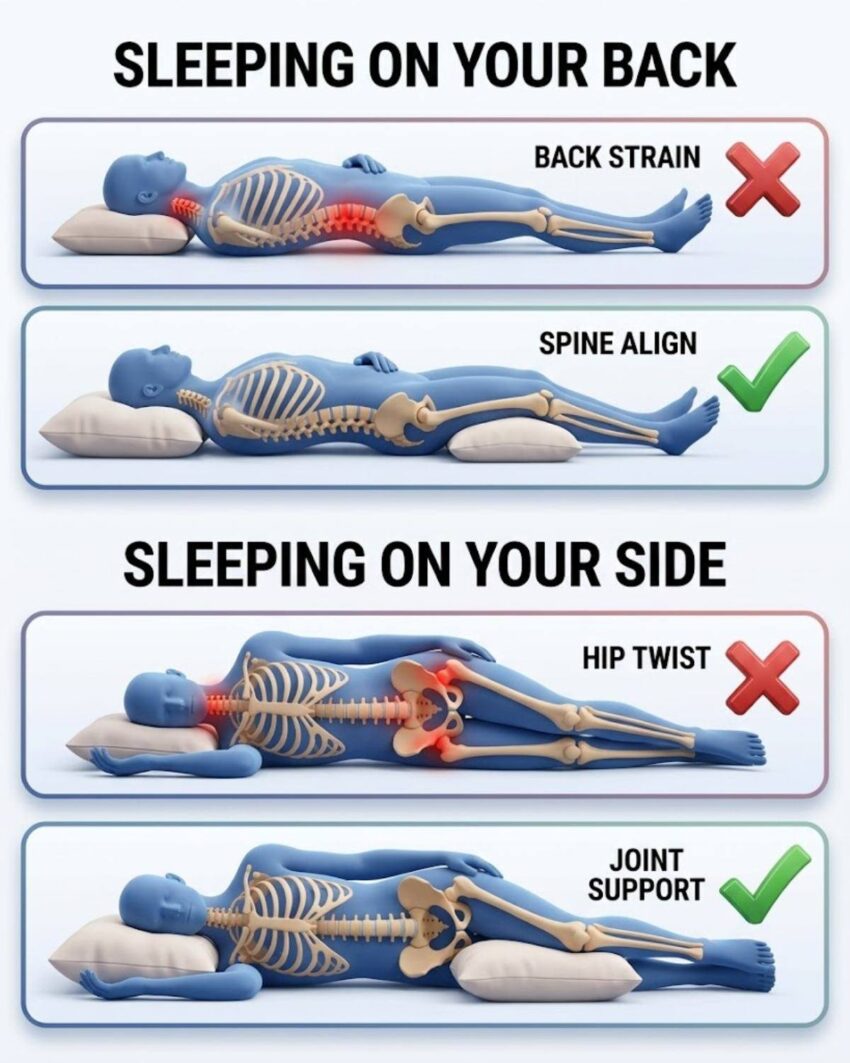
There’s a kernel of truth in that, but it’s often overstated on social media.
Your sleeping position can influence spinal comfort and strain, especially if it’s combined with a bad mattress or pillow. But it doesn’t usually “slowly damage your spine” in a dramatic, irreversible way for most healthy people.
Here’s the real picture:
What sleeping position actually affects
Your spine has natural curves. The goal during sleep is to keep those curves in a neutral, supported position so muscles and ligaments can fully relax.
- Side sleeping (generally best for many people)
Helps keep the spine aligned if your pillow fills the gap between your neck and shoulder, and you place a pillow between your knees. - Back sleeping (also good for spine alignment)
Often ideal for keeping the neck and back neutral, if your pillow isn’t too high. A small pillow under the knees can reduce lower back strain. - Stomach sleeping (least spine-friendly)
More likely to twist the neck and flatten the lower back curve. This can lead to stiffness or discomfort over time.
What actually causes problems
It’s rarely just the sleeping position alone. More important factors are:
- Mattress too soft or too hard
- Pillow not supporting your neck properly
- Existing back or neck conditions
- Long hours in poor posture during the day
Can it “damage your spine”?
In most healthy people: no permanent damage just from sleeping position.
But a poor setup can contribute to chronic pain, stiffness, or nerve irritation over time, especially if you already have spinal issues.
Simple takeaway
Sleeping position matters—but it’s more about reducing strain and improving comfort than preventing spinal “damage.”
If you want, tell me how you usually sleep and I can suggest adjustments that fit your exact situation.
