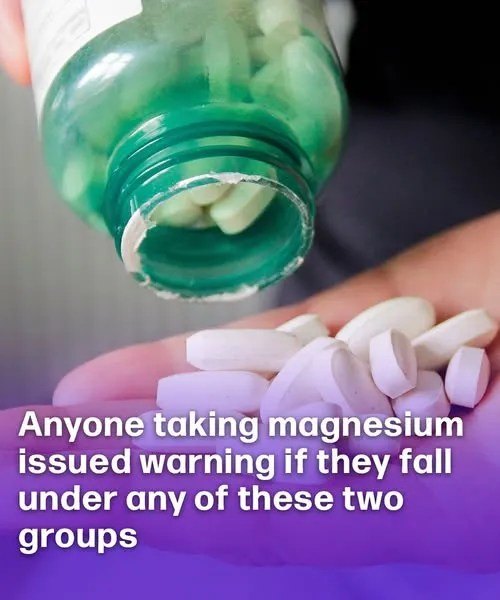
I couldn’t find a single verified mainstream health agency issuing a new official warning this week about magnesium supplements, but there has been renewed attention in recent health reporting and expert discussions about who should be careful with magnesium supplements, especially because overuse and improper use are becoming more common.
Here’s what the warning is generally about:
⚠️ The key concern health experts are highlighting
Magnesium is essential for nerves, muscles, and heart function—but supplemental magnesium (pills, powders, laxatives) can become risky when taken unnecessarily or in high doses.
The biggest issues are:
- Too much magnesium can cause toxicity (especially from supplements, not food)
- Common early side effects: diarrhea, nausea, stomach cramps
- Severe cases (rare): low blood pressure, irregular heartbeat, breathing problems (Office of Dietary Supplements)
🚨 Two high-risk groups most often warned about
1) People with kidney disease (or reduced kidney function)
This is the most important risk group.
- Kidneys normally remove excess magnesium
- If kidneys are weak, magnesium can build up in the blood
- This can lead to dangerously high magnesium levels (hypermagnesemia)
- Risk is higher in older adults because kidney function naturally declines with age (ScienceInsights)
👉 In short: what is harmless for most people can become toxic if kidneys can’t clear it.
2) Pregnant people (only in certain situations)
Magnesium is often beneficial in pregnancy, but experts caution about dosage control:
- Safe upper limit from supplements is generally ~350 mg/day
- Higher doses can cause diarrhea, weakness, dizziness
- Medical magnesium (like IV magnesium in hospitals) is different and closely monitored (ScienceInsights)
👉 The concern is not normal dietary intake, but self-prescribing high-dose supplements or combining multiple sources (prenatal vitamins + magnesium tablets + “sleep gummies,” etc.).
🧠 Why these warnings are being repeated now
Recent expert commentary highlights:
- Magnesium supplements are widely used for sleep, stress, and muscle cramps
- Many people combine multiple products without realizing total dosage
- Supplement regulation is weaker than prescription medicine, so quality and labeling vary
- Over-supplementation cases are increasing, even though severe toxicity is still rare (Verywell Health)
✔️ Practical takeaway
- Food sources (nuts, greens, grains) are very safe
- Supplements are generally safe only when needed and correctly dosed
- Highest caution: kidney disease + high-dose supplements
- Pregnancy: usually safe, but dose matters and should be kept moderate
If you want, tell me what magnesium product or dosage you’re seeing—I can quickly check whether it’s in a safe range or potentially excessive.
