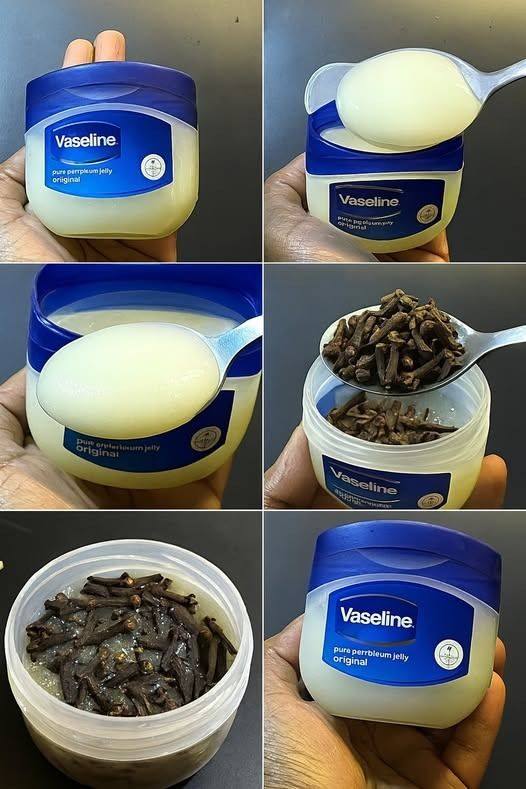
That “secret” gets shared online a lot, but it’s more internet folklore than a proven remedy.
Cloves do contain eugenol, a compound with mild numbing and antimicrobial effects. That’s why clove oil has historically been used in dentistry for temporary toothache relief. Petroleum jelly, on the other hand, is just an occlusive moisturizer—it forms a barrier on skin but doesn’t have any medicinal effect on pain, infection, or inflammation.
So mixing ground cloves or clove oil with petroleum jelly doesn’t create a special treatment. What it does create is basically a scented greasy paste, and there are a few real concerns:
- Skin irritation: Clove (especially in concentrated form) can cause burning, redness, or allergic reactions.
- Uncontrolled dosing: Eugenol is active—too much on skin or gums can irritate tissue.
- No proven benefit: There’s no good clinical evidence that this mixture treats pain, acne, infections, or joint issues (common claims online).
- Risk of masking problems: If someone uses it for tooth pain or skin infection, it can delay proper treatment.
If you saw it being promoted as a “secret hack,” it’s likely just repackaged home-remedy content, not something backed by medical practice.
If you tell me what you were trying to achieve with it (pain relief, skin care, something else), I can suggest safer, actually effective options.
