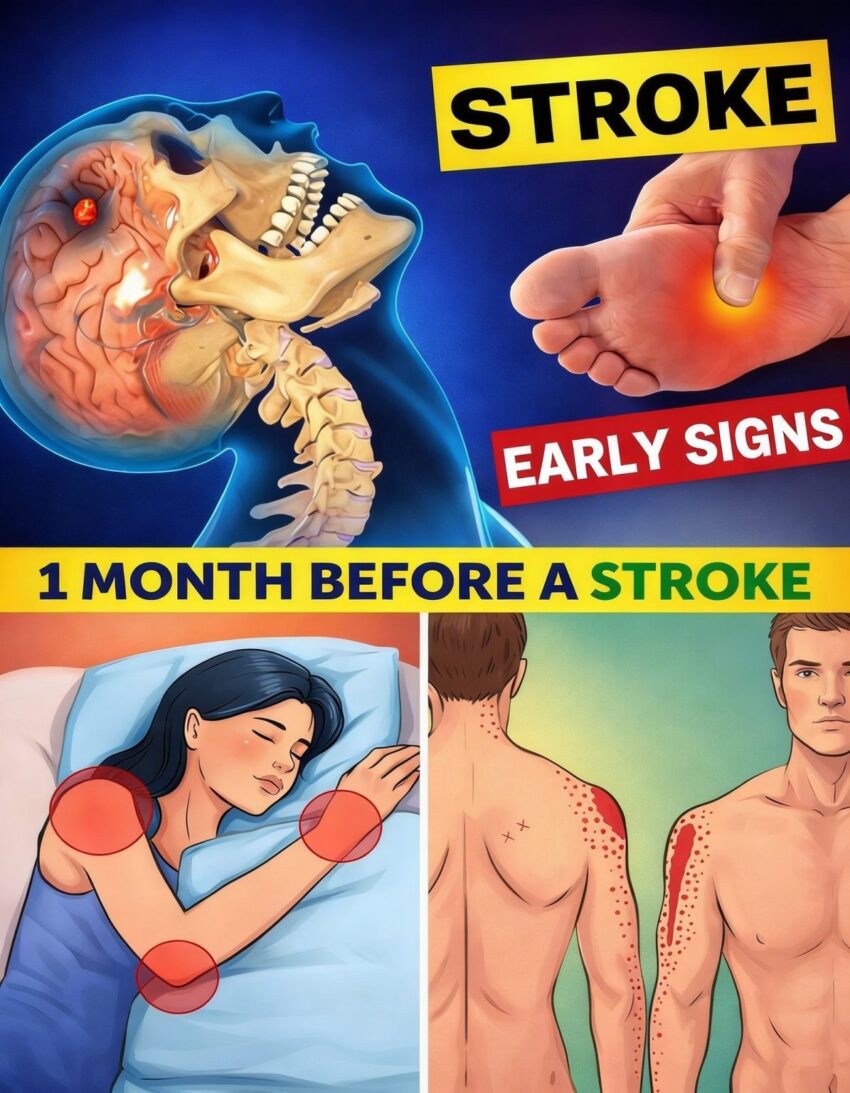
The idea that stroke has “8 warning signs one month before it happens” is not medically accurate in a strict sense. A stroke usually happens suddenly, but some people experience early warning events, most commonly a transient ischemic attack (TIA)—often called a “mini-stroke”—hours, days, or sometimes weeks before a major stroke.
A stroke (Stroke) happens when brain blood supply is blocked or a blood vessel bursts. A TIA is similar but temporary and reversible, and it can be an important warning.
Below is a clearer, medically grounded breakdown.
8 possible warning signs (often linked to TIA or early stroke risk)
These symptoms can come and go, and may appear days or weeks before a major stroke—but often they occur suddenly:
- Sudden weakness or numbness
- Especially on one side of the face, arm, or leg
- Sudden speech difficulty
- Slurred speech or trouble finding words
- Temporary vision problems
- Blurred vision or loss of vision in one eye
- Sudden dizziness or loss of balance
- Trouble walking or coordination issues
- Severe unexplained headache
- More common in hemorrhagic stroke
- Facial drooping
- One side of the face looks uneven when smiling
- Confusion or trouble understanding speech
- Even simple conversations become difficult
- Brief episodes of these symptoms that resolve
- A key sign of a TIA (mini-stroke)
Important: Even if symptoms disappear within minutes, it is still a medical emergency.
9 tips to help prevent stroke
These are evidence-based ways to reduce risk:
- Control blood pressure
- The single biggest risk factor
- Manage diabetes
- Keep blood sugar stable
- Lower cholesterol
- Reduces artery blockage risk
- Quit smoking
- One of the strongest modifiable risks
- Exercise regularly
- At least 30 minutes most days
- Eat a heart-healthy diet
- More fruits, vegetables, whole grains; less salt and fried food
- Maintain healthy weight
- Reduces strain on heart and vessels
- Limit alcohol
- Excess increases stroke risk
- Treat heart conditions
- Especially atrial fibrillation (irregular heartbeat)
When to seek urgent help
If someone suddenly shows signs like face drooping, arm weakness, or speech trouble, treat it as an emergency and seek immediate medical care. Fast treatment can prevent brain damage.
If you want, I can also break down:
- FAST stroke test (easy way to recognize symptoms)
- Differences between TIA vs stroke
- Risk factors specific to age or lifestyle in South Asia
